 English
 中文简体
Brake friction lining is one of those parts that rarely gets noticed until it stops doing its job well. It is the sacrificial friction material that presses against a brake drum or rotor and turns motion into heat. In a drum brake, it is usually bonded or riveted to a curved brake shoe. In a disc brake, the same work is done by a friction pad mounted on a backing plate. The shape changes, but the principle does not: the lining must grip predictably, wear evenly, and cope with heat without fading.
For fleet buyers, repair shops, and distributors, the practical questions are usually simple. What is the lining made of? Does it match the axle and duty cycle? How do you spot wear before it becomes a safety problem? A good answer starts with how the lining behaves in service, not just with a catalogue number.
Content
What a Brake Friction Lining Really Does
When the driver applies the brake, air pressure or hydraulic pressure pushes the shoe or pad toward the rotating surface. The lining makes contact, generates friction, and converts kinetic energy into heat. That heat has to spread through the drum, rotor, shoe, and surrounding hardware. If the lining cannot manage heat, the result is fade, uneven wear, cracking, or a pedal and brake feel that changes under load.
Drum and Disc: Same Job, Different Shape
Drum linings are curved and work on the inside of the drum. Disc pads are flatter and work on the rotor face. Both are friction materials, but their mounting, heat path, and inspection points are different. Treating them as interchangeable blocks of friction material is a common sourcing mistake.
| Aspect | Drum brake lining | Disc brake pad |
|---|---|---|
| Friction surface | Inner drum face | Rotor face |
| Mounting | Bonded or riveted to a brake shoe | Bonded to a backing plate |
| Heat path | Drum mass, webs, and shoe | Rotor vanes and caliper area |
| Wear clue | Shoe thickness, rivet depth, drum scoring | Pad thickness, taper, and rotor condition |
A lining that is too hard may last longer but can be noisy or aggressive on the drum. A lining that is too soft may feel strong at low speed but wear quickly or fade when hot. The right balance depends on the vehicle, load, road profile, and how often the brakes are used.
Materials and Friction Management
A brake friction lining is not just one material. It is a formulation of binders, reinforcing fibers, fillers, friction modifiers, and lubricants. Each ingredient affects grip, wear, noise, heat resistance, and how the lining treats the drum or rotor. That is why two linings with the same dimensions can behave very differently in service.
- Non-asbestos organic linings are often chosen for quieter operation and gentler drum wear, but their heat tolerance depends on the formulation.
- Semi-metallic linings use metallic content to handle heat and load well, which suits heavy trucks and repeated stops, though they can be more aggressive and noisier.
- Sintered linings are designed for high temperature and severe duty, including industrial and wind turbine brake applications where reliability matters more than low noise.
Friction management is about consistency. A lining should deliver a stable coefficient of friction across normal working temperatures, resist fade under sustained load, and wear in a predictable way. It should also match the drum or rotor material. A formulation that works well on one axle family may not be the best choice for another. This is why experienced suppliers ask about the application before recommending a compound.
Matching Lining to the Vehicle and Duty Cycle
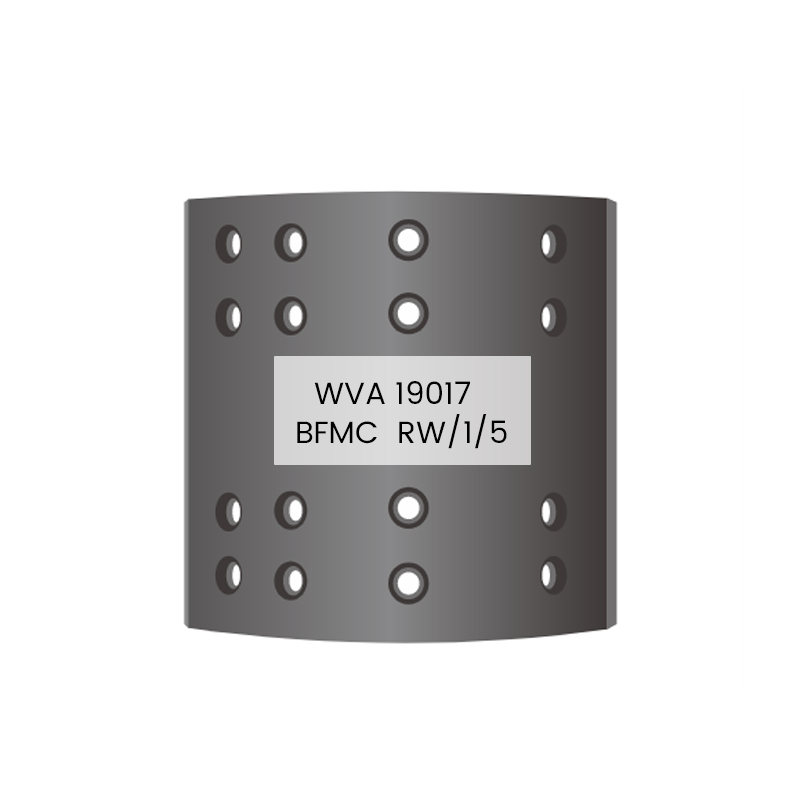
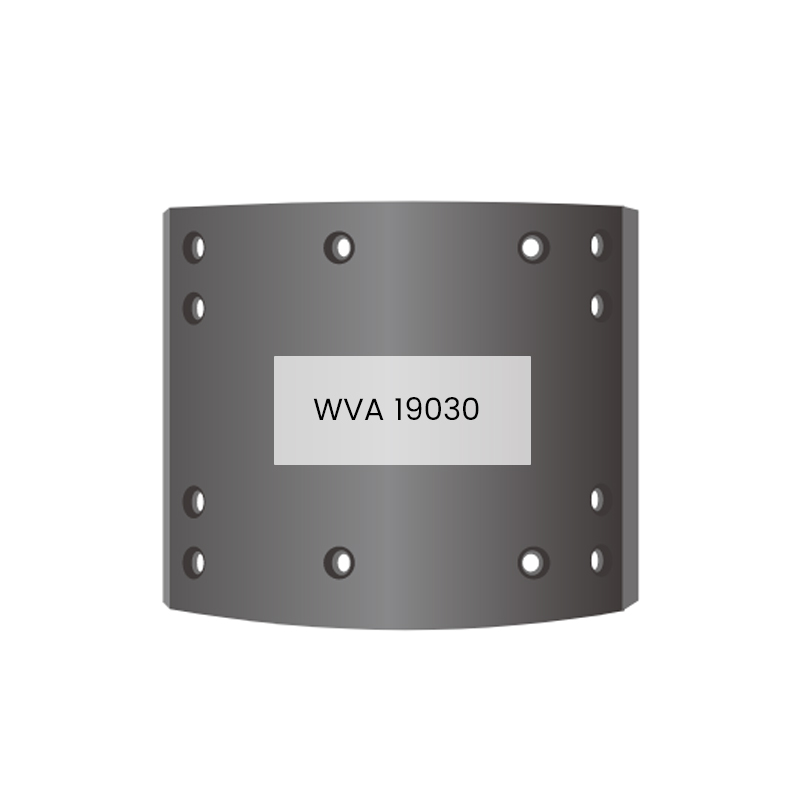
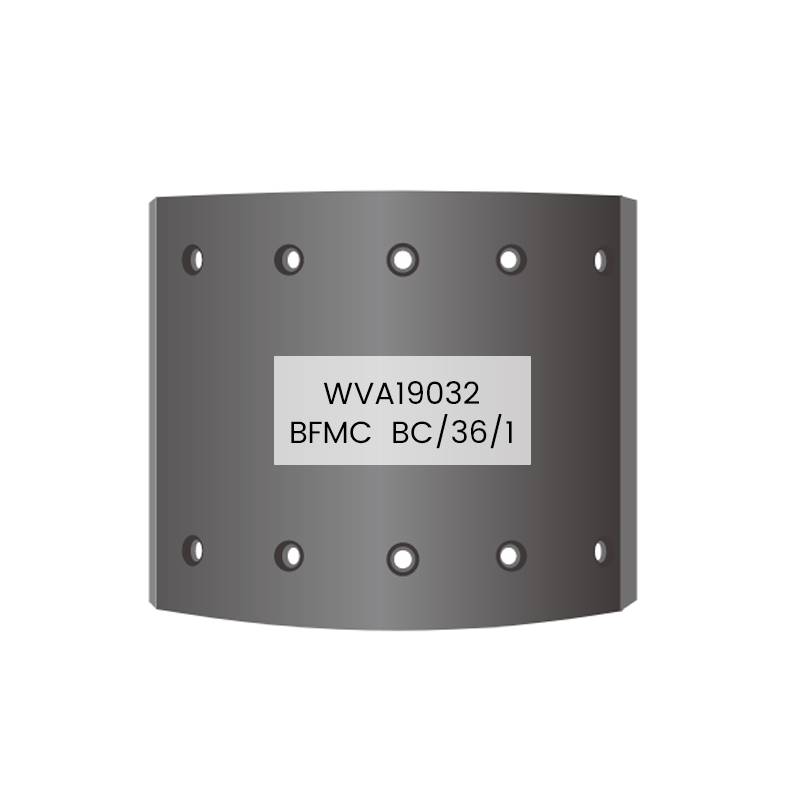
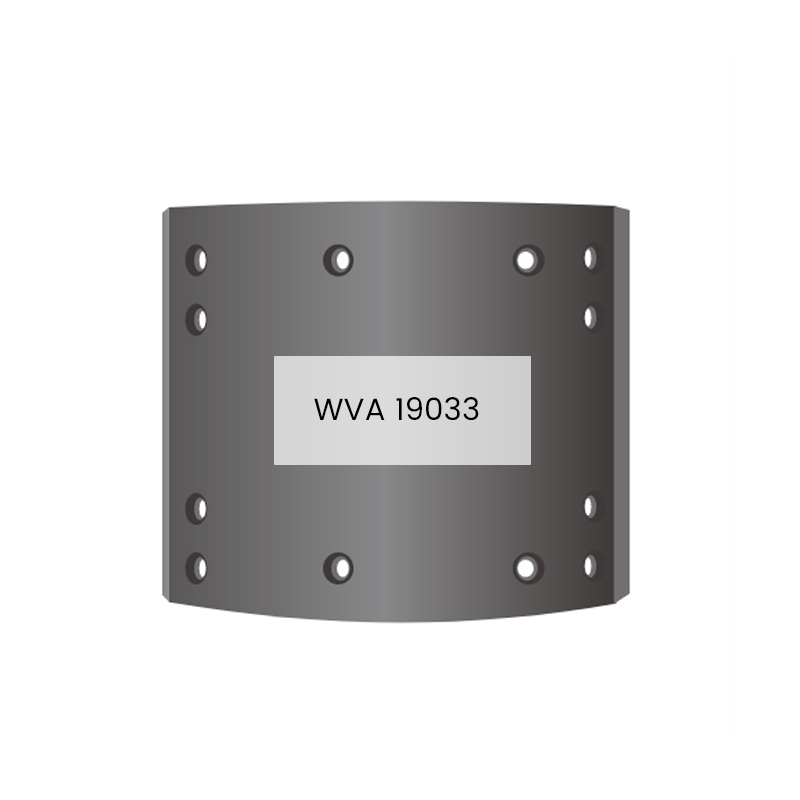
The most common fitment mistake is treating a lining as a generic block. In commercial vehicle braking, the OE number, width, thickness, arc, rivet or bond pattern, hole count, and hardware details all matter. A lining that looks close but sits incorrectly can wear unevenly, overheat, or damage the drum. Fitment is not only about diameter; it is about the complete interface between shoe, lining, and drum.
Read the OE Number and the Hardware
Start with the OE reference or the axle application, then confirm the dimensions and mounting details. Check whether the lining is bonded or riveted, how many holes are required, and whether the shoe needs new rivets, springs, or repair kit parts. For trailer axles, confirm the brake size and shoe type as well. A quick dimensional check before installation saves far more time than a comeback after the vehicle is back on the road.
On American truck applications, buyers often cross-reference familiar OE groups and hole patterns. A listing such as the 4707A heavy-duty lining is organized around that kind of fitment-first lookup, so the workshop can match the shoe and axle before ordering.
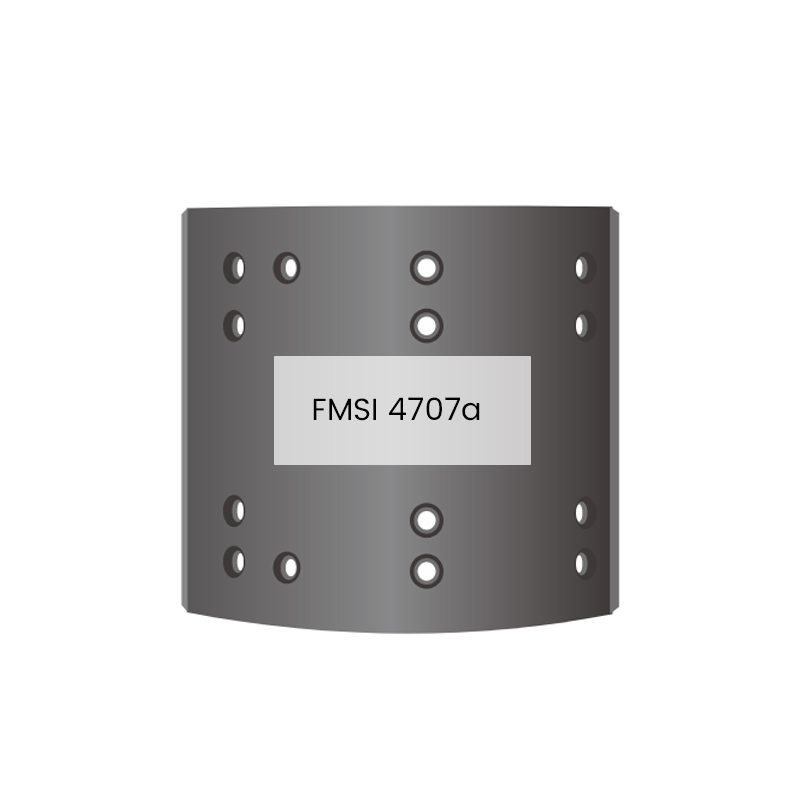 4707A Heavy-Duty Truck Brake LiningFMSI 4707A lining for American truck fitment-first lookup, with a metal-free formula for smooth, quiet braking.View Product →
European trailer and truck axle applications add another layer because several axle families use similar drums but different lining profiles. For a trailer axle application, confirming the lining reference and drum size together is safer than matching by appearance alone. That is the logic behind listings such as the 19094 BC-37-1 lining for trailer axle use.
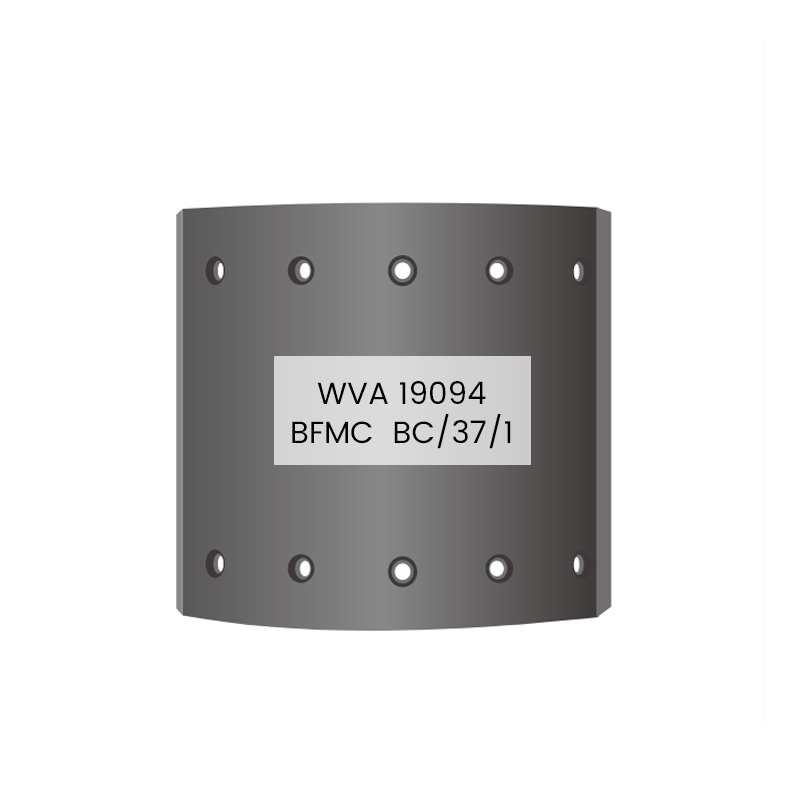 19094 BC/37/1 Brake Lining for BPWWVA 19094 BFMC BC/37/1 lining for BPW trailer and truck axle applications, offering heat dissipation and stable stopping power.View Product →
Off-highway, mining, and wind turbine brakes follow the same rule but with different priorities. Here, the lining may need high load capacity, stable friction at temperature, and resistance to wear in a remote location where maintenance access is limited. A wind turbine brake pad, for example, is selected for holding and emergency stopping performance rather than for road noise comfort.
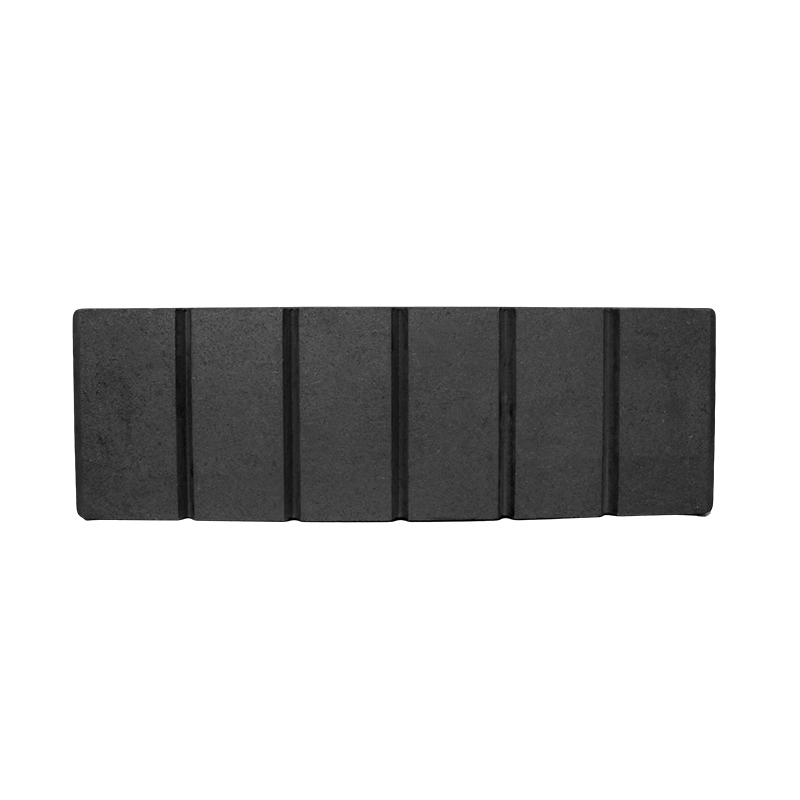 9710030717 High-Load Brake Pad for Wind TurbinesWind turbine brake pad with stable friction, high load resistance, and environmental compliance for yaw and high-speed shaft braking.View Product →
That is why a good product range is organized by application, not just by part shape. Truck, trailer, bus, industrial, and wind turbine brakes may all use friction material, but the duty cycle changes what “good” means.
Installation, Bedding-In, and Wear Signals
Even a well-matched lining can underperform if installation is rushed. Before fitting, inspect the drum or rotor for scoring, cracks, heat checks, and out-of-round condition. Clean the mating surfaces, confirm that the shoe or pad moves freely, and use the correct rivets or fasteners. Do not mix old and new linings on the same axle unless the vehicle manufacturer allows it.
- Check lining thickness against the workshop limit, not just against the wear indicator.
- Look for oil or grease contamination, cracked friction material, and loose rivets.
- Confirm that the lining sits squarely on the shoe or backing plate.
- Inspect the drum or rotor for deep grooves, blue heat marks, and excessive wear.
- Check springs, adjusters, air chambers, and hardware for wear or seizure.
Bedding-In Is Part of the Job
New linings need a bedding-in period so the friction material can mate with the drum or rotor. Start with moderate stops from normal road speed, allow cooling between cycles, and avoid prolonged drag braking or repeated full-load stops in the first few hundred kilometres. After bedding-in, recheck adjustment and inspect for uneven contact. If one lining is wearing faster than the others, the cause may be a seized component, incorrect adjustment, or the wrong compound for the duty cycle.
During service, watch for warning signs such as longer stopping distance, brake noise that changes under load, vibration, or visible lining cracks. A thin lining is not the only reason to replace it. Contamination, glazing, and damaged rivets can also justify replacement even when there is material left.
Sourcing Quality Without the Guesswork
For distributors and fleet buyers, lining quality is a batch issue as much as a product issue. A supplier should be able to show consistent dimensions, stable friction performance, and traceable production. Ask for the OE cross-reference, the backing or rivet details, and the quality documentation that supports the batch. A low unit price means little if the lining wears out early, damages the drum, or causes repeat labour.
Our quality system is built around IATF 16949:2016, and our brake linings are checked against standards such as GB5763-2018, QC/T25-2004, and QC/T27-2004. In practice, that means controlling the formulation, the curing and bonding process, and the final dimensional check. It also means being honest about the application: a heavy-haul truck lining and a wind turbine brake pad should not be sold on the same promise.
If you are reviewing a supplier, look beyond the catalogue. Ask how the compound is matched to the duty cycle, how batch consistency is checked, and how quickly a fitted issue can be traced back to production. You can read more about our quality approach and take a closer look at the factory overview to see how the process is organized.
A brake friction lining is a small part with a large safety role. It has to fit properly, manage heat, wear predictably, and suit the vehicle’s real working conditions. Whether you are maintaining a truck fleet, supplying a workshop, or specifying a brake pad for industrial equipment, the safest choice is the one that matches the application and the hardware, not simply the lowest price on the list.