 English
 中文简体
Ask anyone who keeps European trucks earning and they will tell you the same thing: brake lining is one of those parts where a near-match is not a match. A Mercedes-Benz tractor unit on long-haul duty, a MAN tipper working a quarry, a Volvo combination crossing an alpine pass and a BPW trailer axle rolling behind them all ask the friction material to do a slightly different job. Get the block, the hole pattern and the compound right, and the vehicle stops the way the engineers intended. Get any one of them wrong and you spend the following weeks chasing noise, heat checks or uneven drum wear.
This guide comes from our plant floor rather than from a catalogue cover. European vehicle brake lining is what we build every day, and the questions we hear most are the practical ones: which reference applies, how thick the block should be, why two linings with identical dimensions behave completely differently, and how to tell a genuine fitment from an optimistic guess.
Content
Why European Truck Braking Asks More of a Lining
European heavy commercial vehicles still lean heavily on drum brakes at the drive axles and, above all, at the trailer axles. Disc brakes dominate the front axle on most modern tractor units, but the drum remains the workhorse where cost, robustness and long service intervals matter. That mix shapes what a lining has to survive: gross combination weights around 40 tonnes, long descents where the brake is applied for minutes rather than seconds, and trailer fleets that swap bodies and run near their limit day after day.
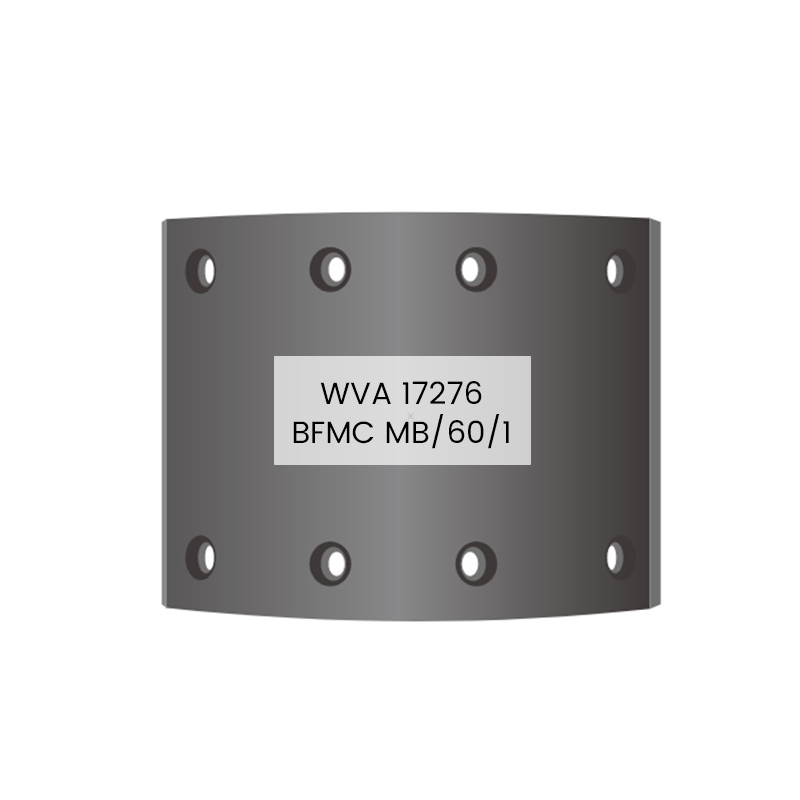
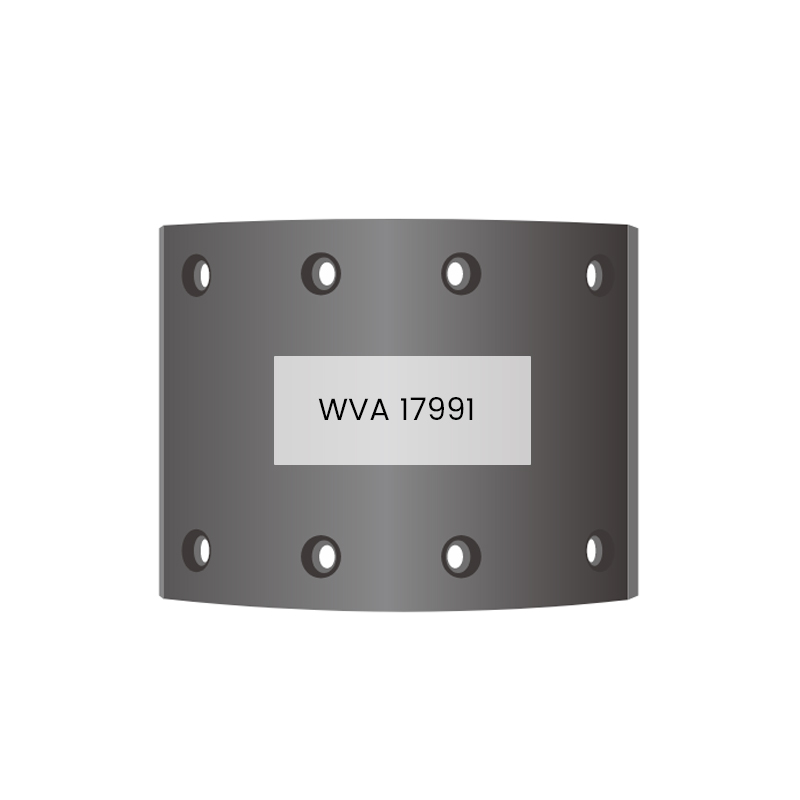
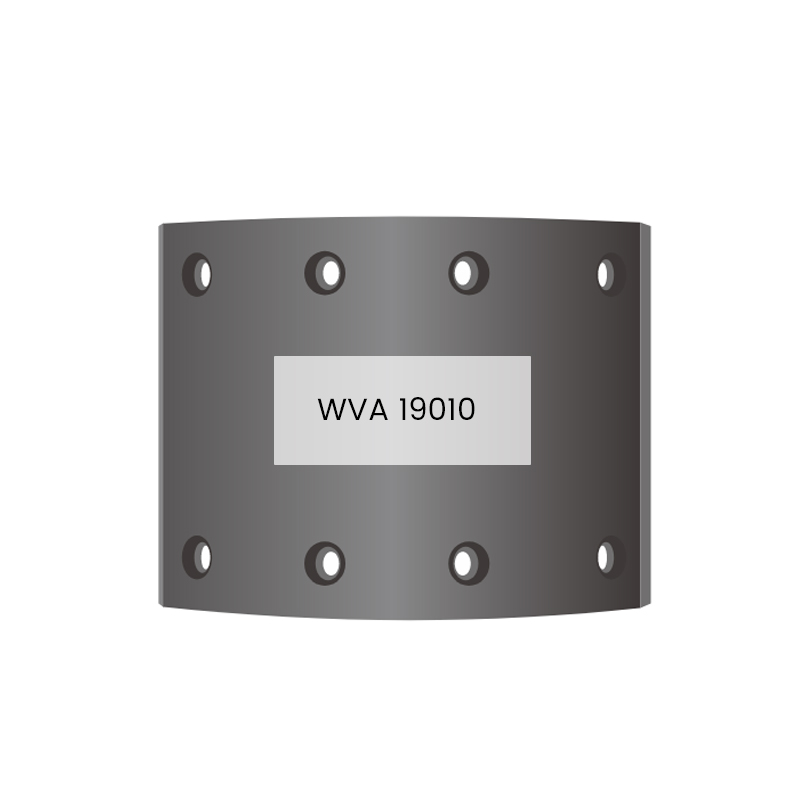
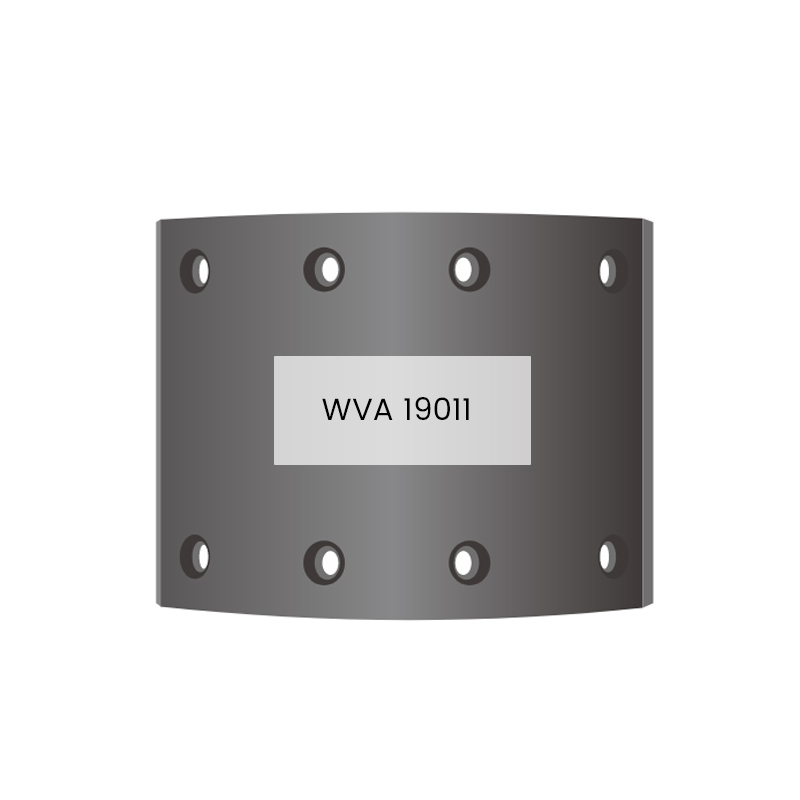
Two consequences follow. First, European lining blocks are usually thick, wide and heavily perforated — eight, twelve, fourteen, sixteen or even twenty-six rivet holes on a single block — because they are fastened to a substantial brake shoe rather than bonded to a small backing plate. Second, replacement linings sold into the European aftermarket are expected to sit inside a defined friction performance band under regulations such as ECE R90, so a lining that is dimensionally correct but thermally wrong is not a legal or a safe substitute.
Reading the References Before You Read the Box
Most sourcing mistakes we see are reference mistakes, not manufacturing mistakes. When a customer sends us a photo of a worn block and a chassis number, we work through the same checklist every time:
- OE or manufacturer number — the anchor reference, and the one that survives across supersessions.
- WVA style number — widely used across Europe for cross-referencing friction parts between makers.
- Physical dimensions — length, width and thickness, measured on the worn block if the number is unreadable.
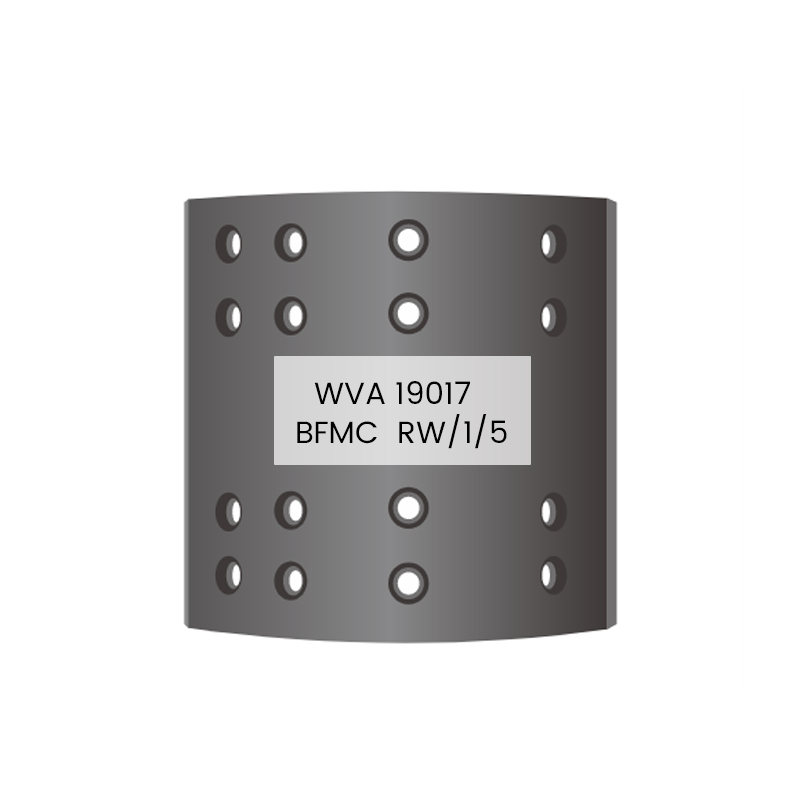
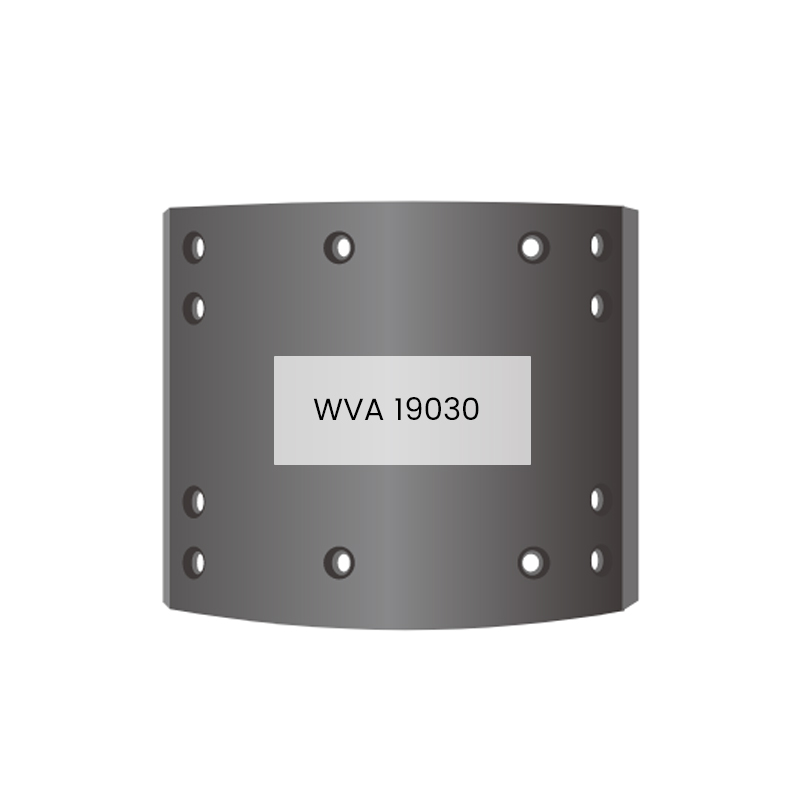
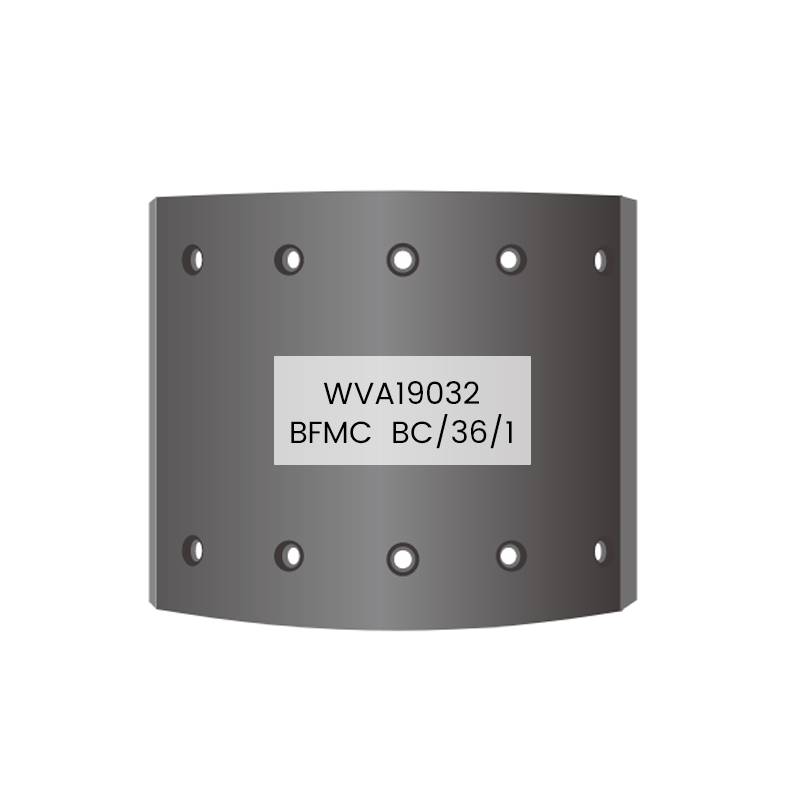
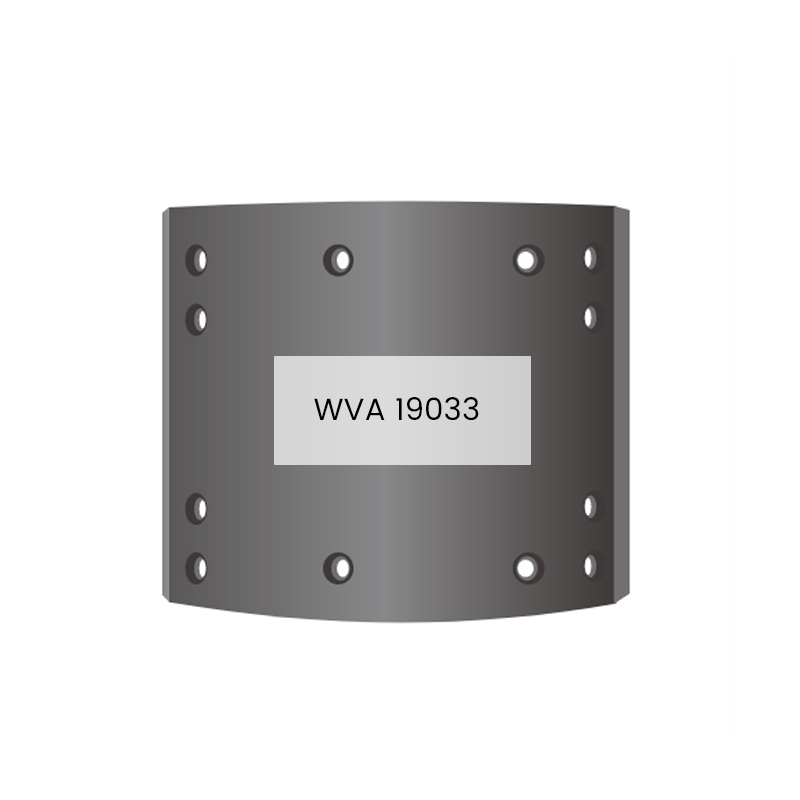
- Hole count and hole spacing — a sixteen-hole block will not fit where eight holes are drilled, however close the outline looks.
- Axle and brake maker — BPW, SAF, York, Meritor and Perrot axles each have their own habits, and trailer specification often differs from the tractor it is coupled to.
Write all five down before you open a quotation. It saves a container of returns later.
A Practical Fitment Map for European Fleets
The table below shows how European vehicle brake lining references tend to group in practice. It is a starting map, not a substitute for checking the OE number against the actual vehicle.
| Vehicle or axle family | Typical reference family | Where it usually works |
|---|---|---|
| Mercedes-Benz trucks and buses | MB series | Long-haul tractor units and rigids with drum-braked rear axles |
| MAN | MP series | Tractor units, tippers and mixers on mixed regional duty |
| Volvo and Renault | VL and RN series | Highway combinations and Renault distribution trucks |
| Scania | SV series | Heavy-haulage, timber and construction combinations |
| DAF and Bova | DF series | Regional distribution and coach work |
| Steyr and Iveco | SY series and Iveco-specific blocks | Mixed fleets and older vehicles still in daily service |
| BPW trailer axles | BC series | Standard European semi-trailer axles |
| SAF and York trailer axles | FU and RW series | Trailer fleets, container chassis and curtain-siders |
| Perrot and specialist brake makers | PB series | Specialty trailer and bus applications |
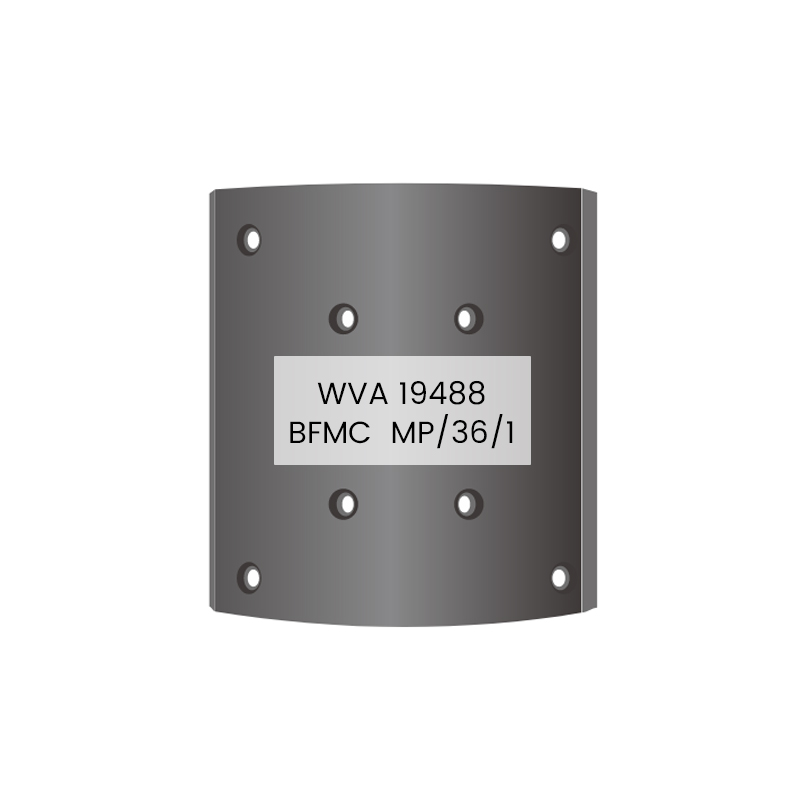 WVA 19488 MP/36/1 European Truck Brake LiningFor MAN and Mercedes-Benz applications, this composite lining is worth checking when matching OE references and comparing friction compounds.View Product →
The Compound Is Where the Real Difference Lives
Two blocks can share the same outline, the same hole pattern and the same thickness, and still behave like different products. What separates them is the friction compound and the way it is cured.
What each family of material is good at
- Non-asbestos organic blends: quiet, gentle on drums, predictable from cold — a sound choice for regional distribution and bus work.
- Semi-metallic blends: stronger bite and better heat tolerance under sustained load, at the cost of slightly more drum wear.
- Hybrid and heavy-haul formulations: aimed at high gross weights and long descents, where fade resistance matters more than cold comfort.
A lining that is too hard for the duty cycle will wear the drum faster than it wears itself. A lining that is too soft will fade on the first serious descent. The correct answer is the one that matches the route, the load and the axle — which is why we ask about duty cycle before we quote a compound rather than after.
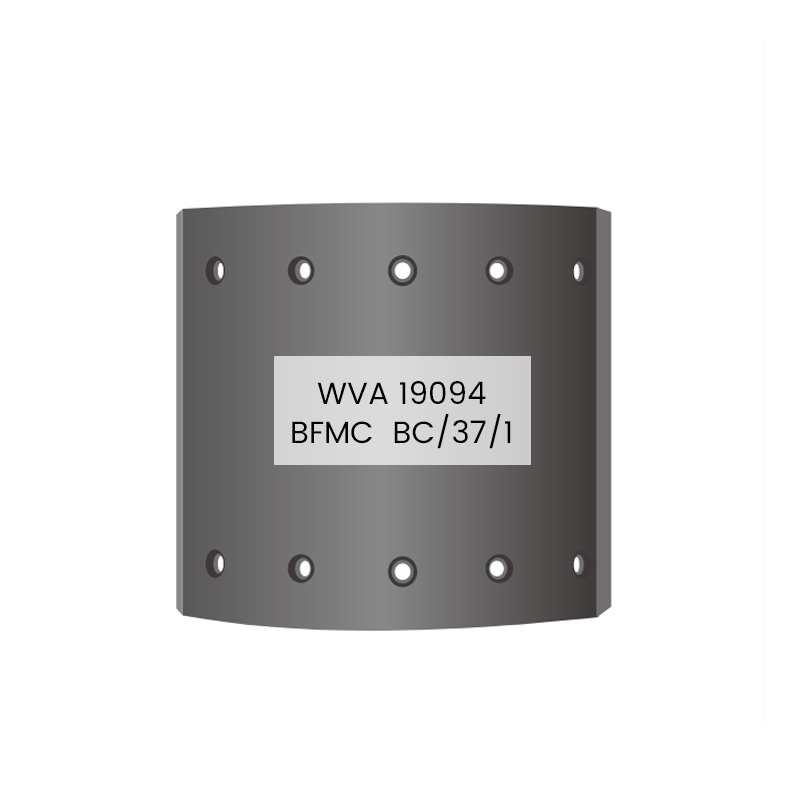 WVA 19094 BC/37/1 Truck Brake Lining for BPWA BPW application lining described for stop-and-go city work and heavy hauling, with heat dissipation and long service life.View Product →
How We Approach European Vehicle Brake Lining
We are a friction material manufacturer based in Huzhou, working from a 43,000 square metre plant and supplying more than 15 million brake linings and pads a year, with over 30 per cent of output going to customers outside China. Our European vehicle range is organised around OE and axle references rather than around generic sizes, because that is how our customers actually buy: one line item, one reference, one drum dimension.
Quality control follows the same logic. We work to IATF 16949:2016 and test against the relevant lining performance standards before a batch is released, and we keep the reference data for each block — dimensions, hole pattern, compound, batch — on file so that a repeat order four years from now still matches. You can read more about the company and its background on our company profile page, or simply send us a reference and let us confirm the fitment.
Fitting and Bedding-In: Small Habits, Long Service Life
Even a perfectly matched lining can disappoint if it is installed carelessly. The routine we recommend to workshops is short and unglamorous:
- Inspect the drum first — scoring, out-of-round and heat cracking all shorten lining life regardless of compound.
- Check drum diameter against the lining thickness; an oversize drum with a standard block gives poor contact and hot spots.
- Clean and lubricate the shoe contact points and anchor pins, then confirm the shoe sits square in the drum.
- Set the slack adjuster correctly, then bed in with a series of moderate stops before loading the vehicle fully.
- Re-check adjustment and lining contact after the first few hundred kilometres of service.
 WVA 19931 SV/40/2 Brake Lining for SCANIAA SCANIA heavy-duty truck lining shaped to OE fitment standards, intended to simplify installation and support proper pad-to-rotor contact.View Product →
None of this is complicated, but it is specific. European vehicle brake lining rewards buyers who work from references, dimensions and duty cycles rather than from a picture that looks about right. If you are unsure which block belongs on a particular axle, our FAQ section covers the common cross-reference questions, and our team is always willing to look at a photo of a worn lining alongside the chassis number and tell you what we would fit.