 English
 中文简体
Wind turbines are built to run for decades, often in places where access is difficult and downtime is expensive. The brake pad for wind turbine systems is a small component compared with the nacelle or blades, yet it plays a serious role in controlling motion, holding position, and protecting the drivetrain during service or emergency stops. At Zhejiang Kooying Autoparts, we have spent years working with friction materials for heavy-duty applications, and wind turbine pads have become one of the most interesting challenges in our product range. You can read more about our company profile if you want the background.
This guide looks at what these pads do, how they differ from truck brake pads, and what buyers and maintenance teams should check before choosing a replacement.
Content
What a Wind Turbine Brake Pad Actually Does
A wind turbine does not brake like a car or a truck. Most of the time, the rotor is allowed to turn freely so the generator can capture energy. Braking comes into play for yaw control, rotor holding, emergency stops, and maintenance lockout. The exact arrangement depends on the turbine design: some systems use a mechanical brake on the high-speed shaft, some use yaw brakes to keep the nacelle aligned, and many use a combination.
That means the pad may be asked to do two very different jobs. It may need to stop a moving rotor with a large amount of kinetic energy in a short time, or it may need to hold a stationary rotor or nacelle against wind loads without slipping. Both jobs demand stable friction, good heat resistance, and predictable behavior after long idle periods. A pad that works well at the factory may still fail in the field if it cannot handle moisture, dust, salt, or temperature swings.
Why Wind Turbine Pads Are Not Truck Pads
It is tempting to assume a heavy-duty truck pad can be adapted for wind service. In practice, the duty cycle is different enough that the friction formulation, backing design, and quality testing need to be matched to the application. The table below gives a simple comparison.
| Demand | Truck brake pad | Wind turbine brake pad |
|---|---|---|
| Duty cycle | Frequent stops, varying loads, road conditions | Long idle periods, occasional holding, emergency stops |
| Heat profile | Repeated heat build-up and cooling during driving | High energy in short events, then long cooling |
| Environment | Road dust, water, mud, de-icing salt | Humidity, salt spray, dust, remote temperature swings |
| Service access | Workshop or roadside service | Nacelle or hub access, often planned and costly |
| Safety role | Primary vehicle braking | Holding, emergency stopping, maintenance protection |
The comparison is not about which pad is better. It is about matching the friction material to the job. A wind turbine pad needs to remain stable when it sits still for weeks and then works hard in a single event.
Materials and Friction Behavior
Wind turbine brake pads are usually built around high-performance friction materials that can endure extreme temperatures, wear, and corrosion. Depending on the design, you may see organic, semi-metallic, or sintered formulations, and the choice affects friction level, wear rate, noise, and disc or brake surface condition. In wind applications, the priority is often a stable coefficient of friction under high load, low wear over long service intervals, and resistance to fade when the brake absorbs energy quickly.
Our own wind turbine range includes pads described as high-load, heavy-duty, high-friction, high-efficiency, durable, and low-wear. Those labels are not just marketing words; they point to different compromises. A high-friction pad may give strong stopping force, while a low-wear pad may trade some bite for longer life. The right balance depends on the turbine brake system, the operating environment, and the maintenance strategy.
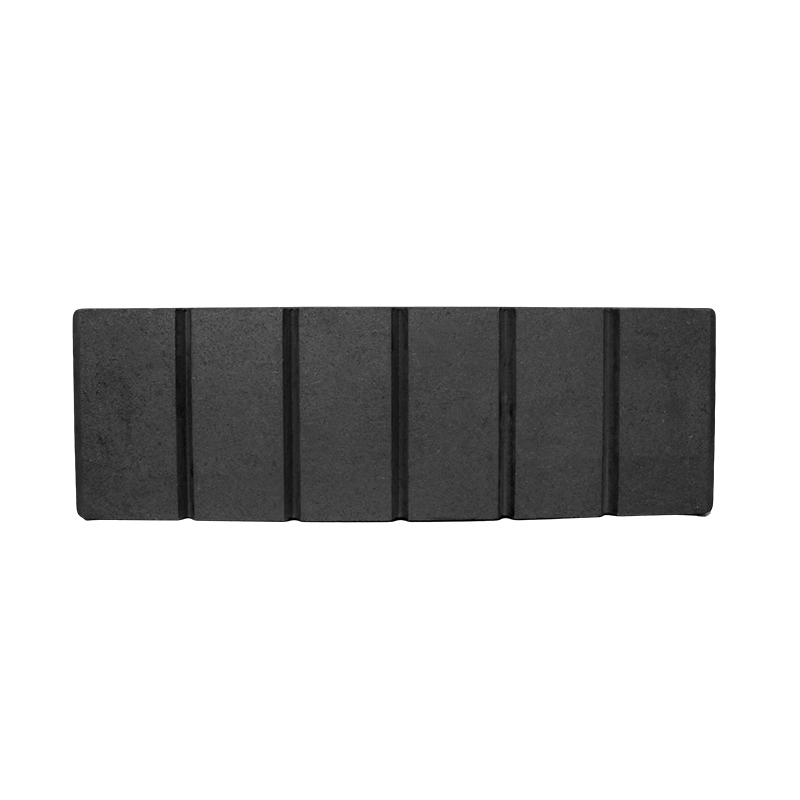 9710030717 High-load Brake Pad for Wind TurbinesHigh-load pad with stable friction coefficients and high shear/compressive strength for yaw and high-speed shaft braking; check against brake maker specifications.View Product →
Choosing the Right Pad for Your Turbine
Selection should start with the brake manufacturer's specification, not with a generic wind turbine pad search. The pad must fit the caliper or brake unit, match the disc or brake surface, and meet the friction and temperature requirements of the original design. A practical checklist looks like this:
- Confirm the turbine model, brake type, and original part number or OE reference.
- Check the pad dimensions, thickness, backing plate, and mounting holes against the existing part.
- Match the friction class and expected duty: holding, emergency stopping, or both.
- Review the operating environment, including humidity, salt, dust, and temperature range.
- Ask for test data, material consistency records, and references from similar applications.
- Plan the replacement interval around inspection findings, not only calendar time.
For buyers who need an overview, our wind turbine brake pad range lists several models with different friction and wear profiles. For example, part 9710081817 is positioned as a high-friction pad, while DADH90JFA06 is designed with low wear in mind. Neither is automatically the best choice; they suit different brake duties and maintenance plans.
 9710081817 High-friction Brake Pad for Wind TurbinesHigh-friction sintered-metal pad for speed regulation and emergency shutdowns, with thermal-fade resistance and environmental compliance; useful where strong braking bite is required.View Product →
Inspection, Maintenance and Replacement Signals
Wind turbine brakes are safety-critical, so inspection should be planned and documented. In our experience, the most useful checks are simple and repeatable:
- Measure pad thickness and compare it with the manufacturer's minimum limit.
- Look for uneven wear, cracks, edge chipping, or separation between friction material and backing.
- Check the brake disc or drum surface for scoring, heat discoloration, or corrosion.
- Confirm that the brake releases fully and that there is no drag during normal operation.
- Record environmental conditions and service hours so wear trends become visible.
Replacement is not only about reaching a wear limit. A pad that has been contaminated by oil, grease, or heavy corrosion may need to come out earlier. The same applies if the brake has been through an emergency stop with unusually high energy. In remote sites, it is better to replace a questionable pad during a planned service visit than to wait for a fault.
 DADH90JFA06 Low-wear Brake Pad for Wind TurbinesLow-wear carbon-based pad with stable 0.35–0.40 friction, high temperature and corrosion resistance, suited to planned maintenance where reduced dust and longer life matter.View Product →
Working With a Friction Material Manufacturer
Wind turbine operators and service companies need suppliers who understand both friction and documentation. As a manufacturer of truck friction materials with more than 15 million sets of brake lining and brake pad capacity per year, we have extended our experience into wind turbine brake pads, including models such as 9710030717, 9710071701, 9710081817, 9710087217, DADH90JFA06, and ZW971001. Our quality system is certified to IATF16949:2016, and our team can discuss material selection, dimensional checks, and supply planning rather than simply quoting a part number.
That said, the most important step is still the application match. Send us the brake type, original reference, and operating conditions, and we can help narrow the options. If you are comparing suppliers, ask the same questions of each one: what friction material is used, how is wear tested, how is batch consistency controlled, and what happens when the turbine operates in a corrosive environment?
Wind turbine brake pads are a small part of a large machine, but they sit at the point where safety, uptime, and maintenance cost meet. Choosing a pad with the right friction profile, checking it with a disciplined inspection routine, and working with a supplier who understands the application will always beat a lowest-price guess. We are happy to talk through your project and help you find a sensible starting point.