 English
 中文简体
Truck brakes are not car brakes scaled up. A loaded tractor-trailer carries enormous kinetic energy, and the brake pad for truck applications must manage heat, pressure, and duty cycles that change from one route to the next. In this guide, we will look at what these pads do, how to match them to the axle and route, how to spot wear early, and how to replace and bed them in properly. The aim is practical: fewer surprises, better stopping performance, and maintenance decisions you can defend.
Content
- 1 What a Brake Pad for Truck Really Does
- 2 How to Choose the Right Brake Pad for Truck
- 3 Friction Material: A Quick Comparison
- 4 Reading Wear Signs Before They Become Roadside Problems
- 5 Step-by-Step: Replacing a Truck Brake Pad
- 6 Bedding-In and Daily Care That Extend Pad Life
- 7 Why Fitment and Quality Control Matter
What a Brake Pad for Truck Really Does
On an air disc brake, the pad sits in the caliper and clamps against the rotor. The friction material converts motion into heat, then releases that heat into the rotor and airflow. That sounds simple until you add a full payload, a long descent, or a delivery route with constant stop-start work. Heat cycling can glaze the surface, distort the rotor, or push the caliper hardware beyond its comfort zone.
A pad that feels fine on a light urban route may fade on a mountain pass, and a pad built for high temperatures may be noisy or slow to warm up in short-haul service. For drum brakes, the equivalent friction part is usually called a brake lining or brake block, working inside a drum. The terms are often mixed up, but the selection logic is similar: match the friction material, the hardware, and the operating conditions.
How to Choose the Right Brake Pad for Truck
Start with the axle, not the catalogue page. Front steer axle pads and drive axle pads often see different loads and wear patterns. Trailer axles add another set of conditions, especially on long combinations. Next, define the route: line-haul, regional distribution, construction, refuse, or mixed service. A pad that performs well in steady highway work may not be the best choice for frequent dock manoeuvring.
Check the rotor thickness and condition, the caliper slide pins, and the wheel-end hardware before assuming the pad is the only problem. Cross-reference the OE number and the axle or brake system specification. If you need a starting point, our truck brake pad range is organised around common OE references and axle applications.
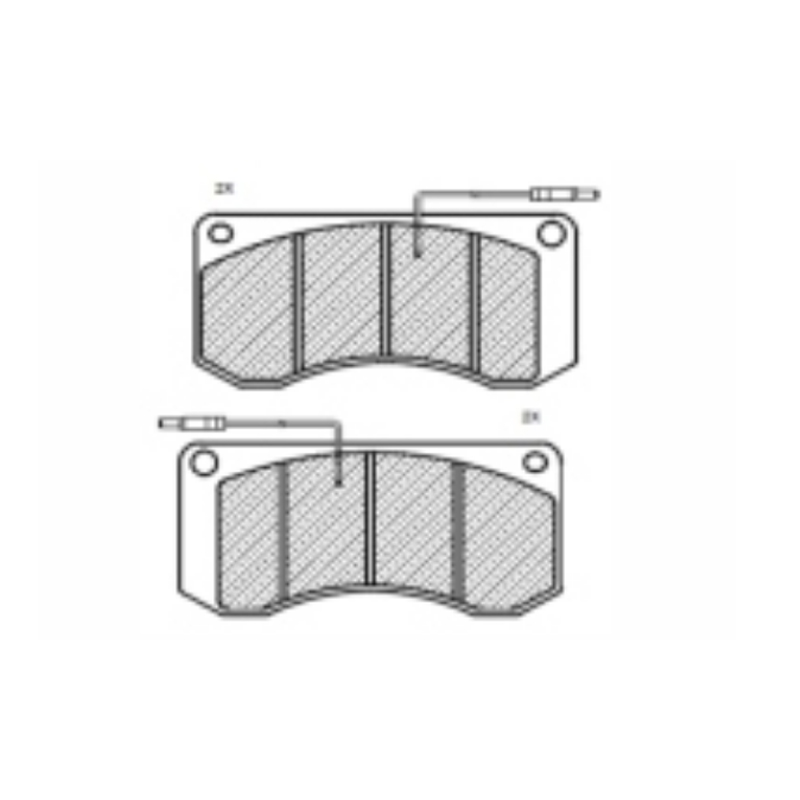 29013/29014 Heavy-Duty Commercial Truck Brake PadA heavy-duty truck brake pad for high-load and long-haul use, with a microfiber-based formula intended for wear resistance, corrosion protection, and stable braking under heat.View Product →
Heavy-haul and mixed-service fleets often need a different balance from urban delivery trucks. Ask what the pad is expected to do: resist fade on long grades, stay quiet during repeated low-speed stops, or tolerate frequent wet and dirty conditions. A reference such as 29256 can be a useful benchmark when comparing heavy-duty options, but the final choice should always follow the OEM specification and the actual duty cycle.
 29256 Heavy-Duty Truck Brake PadA heavy-duty truck brake pad referenced as a benchmark for comparing options, using a microfiber formula intended for wear resistance and high-temperature braking stability.View Product →
Friction Material: A Quick Comparison
There is no universal “best” compound. The right friction material depends on the brake system, the load, the route, and the driver’s expectations. The table below is a simplified starting point for conversations with your supplier or brake specialist.
| Material focus | Typical use | What to watch |
|---|---|---|
| Semi-metallic | Heavy loads, high heat, line-haul | Rotor wear, noise, warm-up behaviour |
| NAO / organic | Mixed service, quieter operation | Heat fade in severe duty |
| Heavy-duty high-friction | Demanding routes and high payloads | Verify rotor compatibility and wear rate |
In our experience, the most expensive mistake is not choosing a premium pad; it is choosing a pad that does not suit the work. A quiet, low-dust compound can be a poor match for a construction fleet, while an aggressive heavy-duty pad may be overkill for a light delivery route.
Reading Wear Signs Before They Become Roadside Problems
Brake pads usually give warning before they fail. The challenge is that trucks cover long distances, and small changes can be missed between service intervals. During inspection, look for:
- Friction material close to the wear limit, or uneven wear from one side of the axle to the other.
- Deep scoring, cracks, heat checks, or a visible lip on the rotor.
- Caliper drag, excessive wheel-end heat, or a pull under braking.
- Noise that changes with temperature, or a pedal that feels soft or long.
- Oil, grease, or brake fluid contamination on the friction surface.
Replace pads as an axle set unless the OEM procedure says otherwise. Mixing a new pad with a worn rotor or a sticky caliper is a short-term repair that often returns as a comeback. If the rotor is below minimum thickness or badly scored, pad replacement alone will not restore safe braking performance.
Step-by-Step: Replacing a Truck Brake Pad
The following is a workshop overview, not a substitute for OEM service information. Air disc brakes, automatic slack adjusters, and wheel-end systems have specific procedures that must be followed.
- Park on level ground, chock the wheels, follow lockout procedures, and release air pressure according to the OEM instructions.
- Raise the axle and remove the wheels using rated lifting equipment and safe support stands.
- Inspect the rotor, caliper, slide pins, boots, and lines. Measure rotor thickness and check for cracks or heavy scoring.
- Remove the caliper hardware and old pads. Keep shims, springs, and retainers in order so the new set goes back correctly.
- Clean the mounting surfaces. Apply the specified lubricant only to metal-to-metal contact points, never to the friction face.
- Retract the caliper piston carefully, then install the new pads, shims, and hardware. Check that the pads move freely in the caliper.
- Torque the caliper and wheel fasteners to the OEM specification. Do not guess or rely on “feel.”
- Reinstall the wheels, lower the truck, and restore air pressure or pump the brake pedal to seat the pads.
- Road test at low speed in a safe area. Check for drag, unusual noise, and a firm pedal before returning the truck to service.
If you are refreshing a common reference, keep the correct pad set and small installation hardware together. A  WVA 29115 Truck Brake PadA truck brake pad model for common reference replacement work; pair it with the correct pad set and installation hardware, then follow proper bed-in steps.View Product → style reference is easier to manage when the workshop has the matching hardware and a clear axle application note.
Bedding-In and Daily Care That Extend Pad Life
After installation, bed the pads in with a series of moderate-to-firm stops from moderate speed, allowing cooling between cycles. Avoid repeated hard stops that cook the friction surface. The goal is to transfer a thin, even layer of friction material to the rotor, not to overheat it.
At every preventive maintenance check, inspect pad thickness, rotor condition, caliper freedom, and wheel-end heat. Keep air lines and valves dry, and investigate any change in braking feel immediately. Drivers can help by reporting drag, unusual smells, or a pedal that changes during the day.
- Keep the caliper slide pins clean and correctly lubricated.
- Do not ignore a hot wheel end or a brake that drags after release.
- Match replacement intervals to the route, not only to the calendar.
- Record pad and rotor wear so you can spot a pattern early.
Why Fitment and Quality Control Matter
Friction material is only part of the story. Backing plates, shims, rivets, and dimensional accuracy all affect how a pad fits and performs. A pad that is slightly out of tolerance can cause drag, noise, or uneven wear. That is why a supplier’s quality system and experience with truck applications deserve a place in your buying decision. You can read more about our background and manufacturing approach in our company profile.
We work with fleets and distributors who need clear OE cross-references and consistent supply. Our brake pad for truck programme is built around common axle and reference groups, with a focus on fit, friction stability, and practical installation. If you are comparing sources, ask for the reference list, the quality documentation, and a straight answer about the duty cycles the pad is designed for.
Good brake maintenance is rarely dramatic. It is a routine of correct selection, honest inspection, careful installation, and attention to small warning signs. Whether you run a small fleet or support a busy workshop, treating the brake pad for truck as a safety-critical component, rather than a commodity line item, is the simplest way to protect uptime and stopping confidence.