 English
 中文简体
中文简体Content
- 1 What Is a Brake Pad and What Does It Do?
- 2 Types of Brake Pads: Material Composition and What Each Offers
- 3 Brake Pad Types Compared: Quick Reference
- 4 Warning Signs That Your Brake Pads Need Replacing
- 5
- 6 How Long Do Brake Pads Last? Realistic Lifespan Expectations
- 7 How to Replace Brake Pads: The Essential Steps
- 8 Brake Pad and Rotor Compatibility: Why They Must Be Matched
- 9 Common Brake Pad Problems and How to Fix Them
- 10 How to Choose the Right Brake Pads for Your Vehicle and Driving Style
What Is a Brake Pad and What Does It Do?
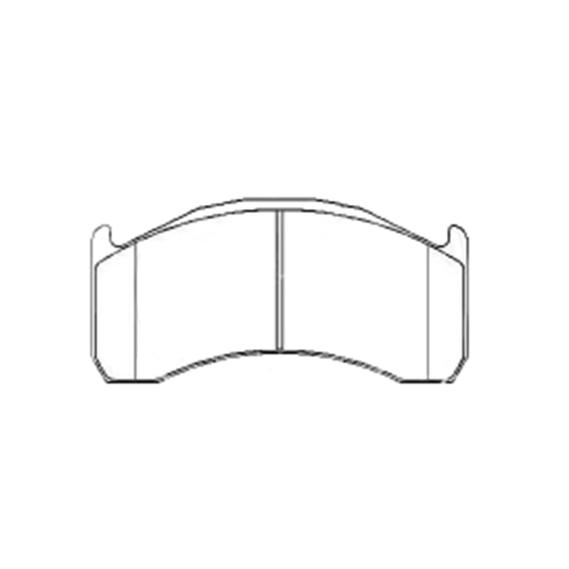
A brake pad is a flat, composite friction component that sits inside a disc brake caliper and presses against the rotating brake rotor (disc) when the driver applies the brakes. The friction generated between the brake pad material and the rotor surface converts the vehicle's kinetic energy into heat, slowing the wheel and bringing the vehicle to a stop. Brake pads are fitted in pairs — one on each side of the rotor — and work together with the caliper, rotor, hydraulic brake lines, and master cylinder as part of the complete disc braking system. They are among the most safety-critical wear items on any vehicle, and their condition directly determines braking distance, pedal feel, and stopping consistency under all driving conditions.
Modern automotive brake pads are engineered composite structures rather than simple friction blocks. A typical brake pad consists of a steel backing plate that provides rigidity and mounts in the caliper, an adhesive or mechanical bonding layer, a friction material compound that does the actual braking work, and in many cases an additional layer of shim or damping material on the back face that reduces noise and vibration transmission to the caliper. The friction compound itself is a carefully balanced mixture of abrasive particles, binding resins, lubricants, and structural fibers — the precise formulation of which determines the pad's performance characteristics across the full range of temperatures, pressures, and speeds it will encounter in service.
Types of Brake Pads: Material Composition and What Each Offers
The most important decision when choosing brake pads is the friction material type. The four main categories — organic, semi-metallic, ceramic, and sintered — each have a distinct combination of performance properties, operating temperature range, noise characteristics, rotor wear compatibility, and price point. Understanding these differences prevents the common mistake of choosing brake pads based on price alone without considering whether the material is suited to the vehicle and driving conditions.
Organic (Non-Asbestos Organic / NAO) Brake Pads
Organic brake pads — formally called non-asbestos organic (NAO) pads since the elimination of asbestos from friction materials — are made from a blend of natural and synthetic fibers (such as glass, rubber, and carbon) bound together with resin. They are the softest brake pad material, which makes them the quietest and gentlest on rotor surfaces — ideal for the cast iron rotors fitted to most passenger cars. Organic pads offer good cold-bite (braking performance from the first application when the brakes are still cold) and produce less rotor wear than harder metallic compounds. Their limitations are a lower maximum operating temperature (typically 300–400°C before fade begins), higher dust production than ceramic alternatives, and faster wear rates than semi-metallic or ceramic pads. Organic brake pads are the standard fitment on the majority of passenger cars and light trucks used for normal city and highway driving.
Semi-Metallic Brake Pads
Semi-metallic brake pads contain 30% to 65% metal content — typically a blend of steel wool, iron powder, copper, and other metal particles — bonded with graphite lubricants and organic binders. The high metal content gives semi-metallic pads outstanding thermal conductivity and heat dissipation capability, significantly raising the temperature threshold before brake fade occurs compared to organic compounds. They offer excellent stopping power across a wide temperature range, good durability, and are well suited to heavier vehicles (SUVs, trucks, towing applications) and more aggressive driving styles. The trade-offs are increased rotor wear (the hard metallic particles are more abrasive than organic compounds), more brake dust (and darker dust than ceramic), more noise at cold temperatures, and a slightly reduced cold-bite performance until the pads reach their effective operating temperature. Semi-metallic pads represent the best balance of performance and cost for performance-oriented drivers and heavier vehicle applications.
Ceramic Brake Pads
Ceramic brake pads are manufactured from dense ceramic compounds combined with copper fibers and bonding agents. Originally developed for high-performance applications, ceramic pads have become increasingly popular for premium passenger car fitment due to their low noise characteristics, very low dust production (and lighter-colored dust that is less visible on alloy wheels), consistent performance across a wide temperature range, and gentle treatment of brake rotors. Ceramic brake pads operate effectively at higher temperatures than organic pads before fading and recover quickly from heat without glazing. Their primary limitation is cost — ceramic pads are typically 30% to 100% more expensive than equivalent organic or semi-metallic products. They also absorb heat into the caliper and brake fluid more readily than semi-metallic pads (which dissipate heat into the rotor), which can be a concern on heavily loaded vehicles used for repeated high-speed braking. Ceramic pads are the best all-round choice for owners who prioritize clean wheels, quiet braking, and rotor longevity in normal to spirited driving.
Sintered (Fully Metallic) Brake Pads
Sintered brake pads are made by fusing metallic particles — primarily copper, iron, and brass — under extreme heat and pressure without organic binders. The resulting pad is extremely hard, highly temperature-resistant, and virtually immune to fade even under sustained heavy braking at temperatures exceeding 600°C. Sintered pads are the standard choice for motorcycles, racing vehicles, and heavy commercial vehicles where repeated high-energy braking demands exceed what organic or ceramic compounds can withstand. For everyday passenger car use, sintered pads are generally over-specified — they require a warm-up period to reach effective operating temperature (cold-bite is poor), generate significant rotor wear, are noticeably noisier than organic or ceramic alternatives, and carry a higher purchase price. However, for track-day use, high-performance motorcycles, and commercial vehicle applications, sintered brake pads are the appropriate choice.
Brake Pad Types Compared: Quick Reference
The table below provides a side-by-side comparison of the four main brake pad material types across the performance and practical criteria that matter most to the majority of vehicle owners.
| Criteria | Organic (NAO) | Semi-Metallic | Ceramic | Sintered |
| Cold-bite performance | Good | Moderate | Good | Poor |
| High-temp performance | Poor–Moderate | Good–Excellent | Good | Excellent |
| Noise level | Very low | Moderate | Very low | High |
| Rotor wear | Low | Moderate–High | Low | High |
| Dust production | High (dark) | High (dark) | Low (light) | Moderate |
| Pad lifespan | Moderate | Good | Good–Excellent | Excellent |
| Relative cost | Low | Low–Medium | Medium–High | High |
| Best suited for | Daily city driving | Trucks, towing, sport | Premium daily use | Racing, motorcycles |
Warning Signs That Your Brake Pads Need Replacing
Recognizing the warning signs of worn brake pads before they reach a critical state is essential for maintaining safe stopping distances and preventing expensive collateral damage to brake rotors and calipers. Most brake pads include built-in wear indicators — small metal tabs that contact the rotor and produce an audible squeal when the pad material wears down to the replacement threshold — but there are several other signs that should prompt an inspection even before the wear indicator activates.
- Squealing or squeaking noise when braking: A consistent high-pitched squeal during braking is the most reliable early warning sign of worn brake pads. This sound is produced by the metal wear indicator tab — deliberately positioned to contact the rotor surface when the friction material has worn to approximately 2–3mm — alerting the driver that replacement is due soon. This squealing should not be confused with the occasional brief squeal that occurs on cold, damp mornings (caused by surface rust on the rotor), which disappears after a few brake applications.
- Grinding or metal-on-metal noise: A harsh grinding sound during braking indicates that the brake pad friction material has been completely consumed and the steel backing plate is now contacting the rotor directly. This is a critical safety situation requiring immediate attention. Metal-on-metal contact rapidly scores and damages the rotor surface, turning what would have been a straightforward pad replacement into a much more expensive brake pad and rotor replacement job.
- Increased stopping distances: If the vehicle takes noticeably longer to stop from the same speed under the same braking pressure, the brake pads may be worn, glazed (heat-hardened surface that reduces friction), or contaminated with oil or brake fluid. Any perceptible increase in stopping distance is a safety-critical symptom that warrants immediate inspection.
- Brake pedal vibration or pulsation: A pulsating sensation through the brake pedal during braking typically indicates warped or uneven rotors — often caused by operating with worn-out pads for too long and allowing the backing plate to score the rotor surface unevenly. However, uneven pad transfer film deposition (where pad material bonds unevenly to the rotor surface) can cause the same symptom and is more common with organic and semi-metallic pads used predominantly in stop-and-go urban traffic.
- Brake warning light illuminated: Many modern vehicles are equipped with electronic brake pad wear sensors — a wire embedded in the pad that shorts to ground when the friction material wears down to the sensor depth, triggering the brake warning light on the dashboard. If your vehicle's brake warning light illuminates (and the handbrake is confirmed to be fully released), inspect the brake pads immediately.
- Visible pad thickness below 3mm: On many vehicles with alloy wheels, you can visually inspect the brake pad thickness through the wheel spokes without removing the wheel. The friction material should be clearly visible pressed against the rotor. If the pad appears very thin — less than approximately 3mm of friction material remaining — schedule replacement promptly even if no noise or pedal symptoms are present yet.
How Long Do Brake Pads Last? Realistic Lifespan Expectations
Brake pad service life varies enormously depending on driving style, vehicle type, urban versus highway driving mix, brake pad material, and rotor condition. Published manufacturer service intervals provide a rough guide, but in practice the variation between drivers and conditions means real-world pad life can differ by a factor of three or more from the stated interval. Understanding the primary factors that affect brake pad wear helps set realistic expectations and plan maintenance appropriately.
For typical passenger cars under normal mixed driving conditions, organic and ceramic brake pads commonly last between 40,000 and 70,000 kilometers (25,000–43,000 miles) on the front axle and somewhat longer on the rear. Semi-metallic pads on the same vehicle may last 50,000–80,000 km due to their greater material hardness and wear resistance. Front brake pads wear significantly faster than rear pads on most vehicles because the front brakes handle 60–75% of the braking load under normal deceleration due to weight transfer. Rear brake pads on vehicles with front-heavy brake bias can last twice as long as front pads before reaching the replacement threshold.
Urban driving — characterized by frequent low-speed braking from traffic — wears brake pads far more quickly than highway driving, where long stretches between braking events allow the pads to cool and recover. A driver who commutes predominantly in stop-and-go urban traffic may find brake pads lasting as few as 25,000 km, while a long-distance highway driver on the same vehicle may achieve 80,000 km or more from the same pads. Aggressive driving — late, hard braking rather than smooth, progressive deceleration — dramatically accelerates pad wear and increases rotor temperatures to the point where thermal damage and premature glazing become concerns.
How to Replace Brake Pads: The Essential Steps
Brake pad replacement is one of the most accessible mechanical maintenance tasks for a competent home mechanic. With the right tools, a clean working environment, and methodical attention to detail, most brake pad replacements can be completed in one to two hours per axle. The following steps outline the correct procedure for replacing disc brake pads on a typical passenger car.
Tools and Parts You Will Need
- New brake pads (correct part number for your vehicle make, model, and year)
- Vehicle jack and axle stands (never rely on a jack alone when working under a vehicle)
- Wheel brace or torque wrench (for wheel nuts)
- Caliper piston retraction tool or large G-clamp
- Socket set and combination spanners
- Brake cleaner spray
- Copper or ceramic brake lubricant (for caliper slide pins and pad contact points — never apply to friction surfaces)
- Brake fluid reservoir cap and a clean rag to manage fluid overflow when retracting the caliper piston
Step-by-Step Replacement Procedure
Prepare the vehicle: Park on a flat, level surface. Loosen the wheel nuts by one turn before jacking the vehicle. Jack the vehicle at the manufacturer's specified jacking points and support it on axle stands before removing the wheel. Never work under a vehicle supported only by a hydraulic jack.
Access the caliper: With the wheel removed, the brake caliper is fully accessible. Locate the caliper guide bolt covers (if fitted) and remove the guide bolts — typically 10mm, 12mm, or 14mm hex — that secure the caliper to the caliper bracket. Slide the caliper off the rotor and suspend it from the spring or suspension arm using a wire hook or cable tie. Never allow the caliper to hang by the flexible brake hose, as this can damage the hose internally.
Remove the old pads and inspect: The old brake pads slide or clip out of the caliper bracket. Note the orientation of any anti-squeal shims or backing plates for reference when fitting the new pads. Inspect the rotor surface for deep scoring, cracking, or minimum thickness markings — if the rotor is worn beyond its minimum serviceable thickness (stamped on the rotor hat or listed in the vehicle service data), replace the rotor at the same time as the pads. Clean the caliper bracket contact surfaces with brake cleaner to remove old brake dust and residue.
Retract the caliper piston: Before the new, thicker pads can be fitted, the caliper piston must be pushed back into the caliper body to create clearance. Open the brake fluid reservoir cap (covering it with a rag to absorb any overflow), then use a caliper piston retraction tool or a large G-clamp with a piece of old pad as a pressing plate to slowly push the piston fully back into the caliper. On rear calipers with integrated parking brake mechanisms, the piston typically must be rotated clockwise while pressing inward using a dedicated retraction tool — it will not retract with straight compression alone.
Fit the new pads and reassemble: Apply a small amount of copper or ceramic brake lubricant to the caliper slide pins (after cleaning them with brake cleaner and inspecting the rubber boots for deterioration) and to the metal contact points on the caliper bracket where the pad backing plates slide — never to the friction face of the pads or the rotor surface. Fit the new pads into the bracket, ensuring any directional arrows or fitment indicators point in the correct direction. Refit the caliper over the new pads and torque the guide bolts to the manufacturer's specification. Refit the wheel and torque the wheel nuts to the correct specification in a star pattern.
Bed in the new pads: New brake pads require a bedding-in period — typically 300 to 500 km of graduated, progressive braking — during which the friction material and rotor surface mate to each other and a uniform transfer film is established. Avoid any hard emergency stops during this period. Perform several moderate stops from 60 km/h to 20 km/h with progressive pedal pressure, allowing the brakes to cool fully between stops. After bedding, braking performance will reach its full potential and remain consistent throughout the pad's service life.
Brake Pad and Rotor Compatibility: Why They Must Be Matched
Brake pads and rotors do not function independently — they are a matched friction pair, and the performance and longevity of each is directly affected by the other. Fitting high-performance brake pads on worn, scored, or inadequately specified rotors will not deliver the expected improvement in braking performance, and may accelerate rotor wear or cause noise and vibration that would not occur with the correct combination.
Cast iron rotors — the standard material for the vast majority of passenger cars — are compatible with all brake pad types but wear at different rates depending on pad hardness. Organic pads are gentlest on cast iron rotors; sintered and hard semi-metallic pads cause the most rotor wear. Carbon-ceramic composite rotors — fitted to high-performance sports cars and some premium vehicles — require dedicated carbon-ceramic-compatible brake pads, as conventional organic or metallic pads will not generate adequate friction on the slick carbon-ceramic surface and will rapidly glaze. Fitting the wrong pad type to a carbon-ceramic rotor is an expensive mistake, as replacement carbon-ceramic rotors can cost several thousand dollars per corner.
When replacing brake pads, always inspect the rotor for minimum thickness (measured with a micrometer at multiple points across the swept surface), lateral runout (rotor wobble, measured with a dial indicator), surface finish (deep scoring deeper than 1.5mm warrants replacement), and the presence of heat discoloration or cracking that indicates thermal overload. Fitting new pads on rotors that are at or below minimum thickness is a safety risk — the reduced thermal mass of a thin rotor means it reaches critical temperatures more quickly during heavy braking, increasing fade and the risk of rotor cracking. Best practice is to replace rotors and pads together when either component is at its wear limit, as the cost saving of fitting new pads on worn rotors is typically eliminated within a short time when the premature rotor replacement becomes necessary anyway.
Common Brake Pad Problems and How to Fix Them
Even correctly specified and properly installed brake pads can develop problems if the braking system has other issues or if operating conditions are unusual. The following are the most frequently encountered brake pad problems, their causes, and their appropriate solutions.
Brake Fade
Brake fade is a temporary but potentially dangerous reduction in braking effectiveness caused by excessive heat. Pad fade occurs when the organic binder in the friction material degrades at very high temperatures, releasing gases that form a thin film between the pad and rotor and reducing friction. Fluid fade occurs when brake fluid reaches its boiling point and vapor bubbles form in the hydraulic system, making the pedal feel spongy and unresponsive. Pad fade is addressed by upgrading to a higher-temperature brake pad compound (semi-metallic or high-performance ceramic) and ensuring adequate cooling airflow to the brakes. Fluid fade is addressed by upgrading to a higher dry boiling point brake fluid (DOT 4 or DOT 5.1 instead of standard DOT 3) and ensuring the fluid is changed at the manufacturer's recommended interval, as brake fluid is hygroscopic and absorbs water over time, progressively lowering its boiling point.
Brake Pad Glazing
Glazing occurs when brake pad friction material becomes heat-hardened and develops a smooth, vitrified surface layer that significantly reduces its friction coefficient. It is most common when new pads are subjected to aggressive heat cycling before proper bedding-in, when pads are repeatedly brought to high temperature and then cooled very slowly without sufficient airflow, or when a stuck or dragging caliper keeps the pad in continuous light contact with the rotor. Mildly glazed pads can sometimes be restored by carefully scuffing the friction surface with 120-grit sandpaper to expose fresh material beneath the glazed layer. Severely glazed pads should be replaced, as the full extent of the glazed zone cannot be reliably assessed visually.
Uneven Brake Pad Wear
If the inner and outer brake pads on one corner wear at significantly different rates, or if one axle's pads wear much faster than the other, the most likely causes are a sticking caliper piston or guide pin, incorrect pad fitment, or a hydraulic imbalance in the system. A sticking caliper keeps one pad in continuous contact with the rotor, causing that pad to wear rapidly while the opposing pad remains relatively intact. Sticking guide pins — caused by corroded or dried-out pin boots — prevent the caliper from floating correctly, causing uneven pressure distribution. Both issues must be rectified before fitting new pads; fitting new pads to a caliper with a sticking piston or seized guide pins will simply reproduce the uneven wear pattern with the new components.
How to Choose the Right Brake Pads for Your Vehicle and Driving Style
With so many brake pad options on the market — ranging from budget-oriented economy pads to premium performance compounds — selecting the right product requires matching the pad's performance profile to your actual driving demands rather than defaulting to the cheapest available option or automatically choosing the most expensive premium product.
- For everyday city and highway driving in a standard passenger car: Quality ceramic brake pads represent the best all-round choice — quiet, low-dust, gentle on rotors, and with consistent performance across the temperature range encountered in normal driving. Organic pads are a perfectly adequate lower-cost alternative if noise and dust are not priorities. Avoid budget "economy" pads with no verifiable performance data, as the friction coefficient variability in low-quality pads can result in inconsistent pedal feel and longer stopping distances.
- For SUVs, 4WDs, or vehicles used for towing: Semi-metallic brake pads are the appropriate choice for heavier vehicles and towing applications. The higher thermal capacity and better high-temperature performance of semi-metallic compounds handle the greater kinetic energy that heavier vehicles and loaded trailers generate during braking. Ceramic pads can be used in these applications but may be slightly more susceptible to fade during prolonged loaded descents or repeated heavy stops.
- For performance and sporty driving on public roads: High-performance semi-metallic or "sport ceramic" brake pads offer a good balance of everyday drivability and improved high-temperature performance for enthusiastic driving. Products from specialist performance brake brands are available in compounds specifically designed for road use with improved bite and fade resistance compared to standard OE fitment pads.
- For track days and motorsport: Dedicated track brake pads with sintered or high-temperature semi-metallic compounds and a friction coefficient rated for 500°C or above are necessary for sustained lap driving. Be aware that most dedicated track compounds have poor cold-bite and generate significant rotor and pad wear in normal road use, making them impractical for dual road-and-track use unless you are prepared to change pads and bleed fluid between road and track sessions.
- Always replace in axle pairs: Regardless of which pad compound you choose, always replace brake pads as a complete axle set — both left and right simultaneously. Fitting new pads on one side and leaving worn pads on the other creates a braking force imbalance that causes the vehicle to pull to one side under braking, a serious safety concern that becomes more pronounced during hard stops.