 English
 中文简体
中文简体Content
- 1 What Brake Fluid Actually Does Inside Your Car
- 2 Breaking Down the DOT Ratings: DOT 3, DOT 4, DOT 5, and DOT 5.1
- 3 How Moisture Degrades Brake Fluid — and Why It Matters
- 4 How to Check and Top Up Brake Fluid the Right Way
- 5
- 6 How to Flush and Bleed Brake Fluid: Full System Replacement
- 7 How Often Should You Replace Brake Fluid?
- 8 Brake Fluid Safety, Storage, and Disposal
What Brake Fluid Actually Does Inside Your Car
Brake fluid is the hydraulic medium that transfers force from your brake pedal all the way to the brake calipers or wheel cylinders at each corner of your vehicle. When you press the pedal, the master cylinder pressurizes the fluid, and that pressure is transmitted almost instantly through steel lines and rubber hoses to squeeze the brake pads against the rotors — or the shoes against the drums. Without fluid, your brakes simply will not function, no matter how hard you press.
What makes brake fluid unique compared to other automotive fluids is that it must remain stable under extreme pressure spikes and high temperatures. During aggressive braking, brake caliper temperatures can exceed 300°C (572°F), and the fluid in the lines is exposed to that heat indirectly. A fluid that boils or compresses under these conditions will cause spongy pedal feel or complete brake fade — a dangerous situation on any road.
Modern vehicles use glycol-ether-based hydraulic fluid in the vast majority of cases, though some specialty and older vehicles use silicone-based (DOT 5) formulations. The glycol-ether types are hygroscopic, meaning they gradually absorb moisture from the air over time. This moisture absorption is intentional by design — it keeps water from pooling in one spot and causing localized corrosion in the brake lines or calipers.
Breaking Down the DOT Ratings: DOT 3, DOT 4, DOT 5, and DOT 5.1
The DOT rating system — set by the U.S. Department of Transportation under FMVSS 116 — classifies brake fluid primarily by its dry boiling point (fresh fluid) and wet boiling point (fluid that has absorbed 3.7% water by volume). The higher the boiling point, the more heat the fluid can withstand before vaporizing and causing brake fade.
| DOT Grade | Base Type | Dry Boiling Point | Wet Boiling Point | Typical Use |
|---|---|---|---|---|
| DOT 3 | Glycol-ether | 205°C (401°F) | 140°C (284°F) | Older/light-duty passenger cars |
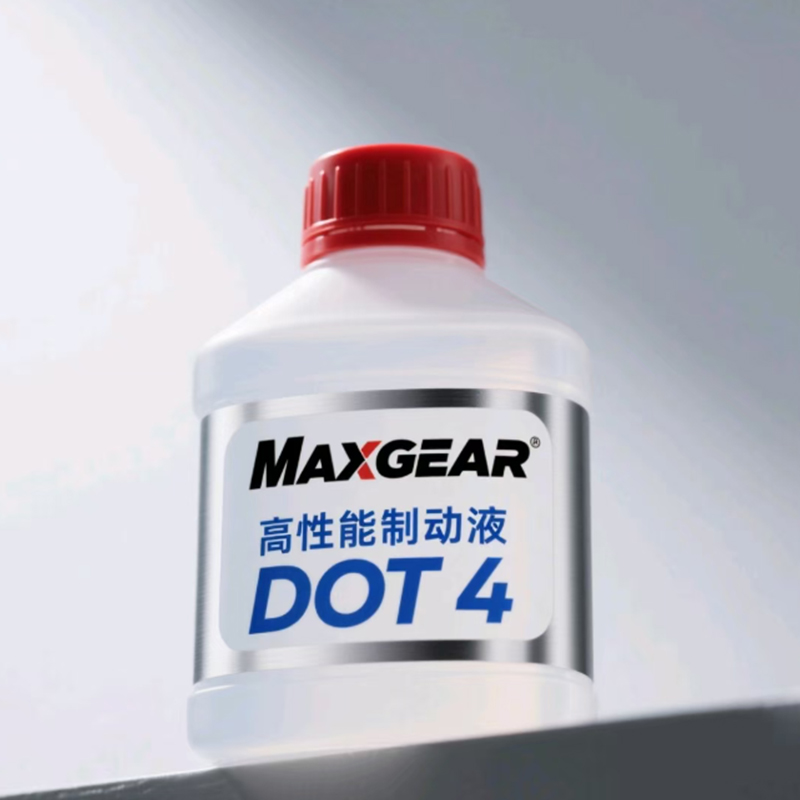
| DOT 4 | Glycol-ether + borate ester | 230°C (446°F) | 155°C (311°F) | Most modern passenger vehicles |
| DOT 5 | Silicone | 260°C (500°F) | 180°C (356°F) | Military vehicles, show cars, long-term storage |
| DOT 5.1 | Glycol-ether (low viscosity) | 260°C (500°F) | 180°C (356°F) | High-performance and ABS/ESP systems |
DOT 5 is often misunderstood. Despite its number suggesting it is an upgrade from DOT 4, it is chemically incompatible with glycol-based fluids. Never mix DOT 5 silicone fluid with DOT 3, DOT 4, or DOT 5.1 — doing so will create a gel-like mixture that can clog valves and destroy seals. DOT 5.1, however, is a glycol-ether fluid and is fully compatible with DOT 3 and DOT 4, though you should always check your vehicle's owner manual before mixing grades.
For most daily-driven cars built after 2000, DOT 4 is the correct and most common specification. Vehicles equipped with ABS, traction control, or electronic stability programs generate more heat through rapid pump cycling, which makes DOT 4's higher wet boiling point particularly valuable. High-performance and track vehicles often use DOT 5.1 or even dedicated racing brake fluids, which can have dry boiling points exceeding 300°C.
How Moisture Degrades Brake Fluid — and Why It Matters
Glycol-ether brake fluids absorb moisture at a rate of roughly 1–2% per year under normal driving and storage conditions. This happens because rubber brake hoses and reservoir caps are slightly permeable to water vapor. As the water content rises, the boiling point of the fluid drops sharply — which is precisely why the wet boiling point rating exists.
A bottle of fresh DOT 4 fluid might have a dry boiling point of 230°C. After two years in service with just 3–4% water contamination, that same fluid's effective boiling point can fall to around 155–165°C. On a long mountain descent or during repeated hard stops on a race circuit, that margin disappears quickly. Vapor bubbles form in the lines, and since vapor is compressible while liquid is not, the pedal goes spongy — or in severe cases, goes straight to the floor.
Beyond boiling point, water in the hydraulic system accelerates corrosion of metal components including the master cylinder bore, caliper pistons, and ABS modulator valves. Pitting in these surfaces can lead to seal failure and internal fluid leaks, which are expensive to repair. Regular fluid replacement is one of the most cost-effective ways to protect these components long-term.
Signs Your Brake Fluid Is Due for a Change
- Spongy or soft brake pedal that gets worse after repeated hard stops
- Dark brown or black discoloration in the reservoir (fresh fluid should be clear to light amber)
- It has been more than 2–3 years or 45,000 km (30,000 miles) since the last flush
- A brake fluid test strip or refractometer reads moisture content above 3%
- You notice a burnt or acidic smell after a hard stop
How to Check and Top Up Brake Fluid the Right Way
Checking brake fluid is a straightforward task that takes under two minutes. Open the hood and locate the brake fluid reservoir — it is typically a translucent plastic container mounted on the driver's side of the firewall, directly above the master cylinder. Without opening the cap, look at the fluid level against the MIN and MAX markings on the side. The level should sit between the two marks.
A low fluid level has two common causes. First, brake pads wearing down over time causes the caliper pistons to extend further, which pulls more fluid from the reservoir — this is normal and the level will gradually drop as pads wear. Second, a genuine leak somewhere in the hydraulic circuit. If the level drops suddenly or repeatedly returns to low after topping up, inspect your brake lines, calipers, and master cylinder for external leaks before assuming it is just pad wear.
Topping Up: Key Rules to Follow
- Always use the grade specified in your owner's manual — mixing incompatible grades can damage seals and ABS components.
- Use only fluid from a freshly opened, sealed container — fluid in open or partially used bottles absorbs moisture and may already be degraded.
- Clean around the reservoir cap before opening to prevent dirt from falling in.
- Avoid overfilling — if you plan to change pads soon and push the caliper pistons back, the fluid level will rise and may overflow.
- Brake fluid is highly corrosive to painted surfaces — wipe up any spills immediately with water.
How to Flush and Bleed Brake Fluid: Full System Replacement
Topping up the reservoir only dilutes old fluid with new — it does not replace the fluid sitting in the lines, calipers, and ABS modulator. A proper brake fluid flush pushes fresh fluid through the entire hydraulic circuit until all the old, moisture-laden fluid is expelled. This is what truly restores the system's performance and corrosion resistance.
The classic two-person bleeding method works well for a full flush. One person pumps the brake pedal while the other opens and closes the bleed nipple at each wheel in sequence — typically starting from the wheel farthest from the master cylinder (rear passenger side on most vehicles) and working toward the closest (front driver's side). As fresh fluid is pumped through, the old darker fluid is expelled into a catch bottle until only clear, new fluid emerges.
Pressure bleeders and vacuum bleeders allow a single person to complete the job. Pressure bleeders pressurize the reservoir and push fluid through the system continuously, while vacuum bleeders attach to each nipple and suck fluid through. Both are effective, though pressure bleeding tends to produce more consistent results and is faster on vehicles with ABS systems that have multiple internal valves.
Step-by-Step Flush Process
- Park on a level surface and chock the wheels. Allow brakes to cool completely if recently used.
- Suck out the old fluid from the reservoir using a turkey baster or fluid transfer pump and refill with fresh fluid of the correct DOT grade.
- Attach a clear bleed tube to the first bleed nipple (farthest wheel from master cylinder) and submerge the other end in a catch bottle with a small amount of fresh fluid.
- Loosen the nipple approximately ¾ of a turn. Pump the brake pedal slowly until fresh, clear fluid flows steadily without bubbles.
- Tighten the nipple before the pedal is released (to prevent air ingestion), then move to the next wheel.
- Monitor the reservoir constantly and keep it topped above the MIN line throughout the process — allowing it to run dry will introduce air into the master cylinder, requiring additional bleeding time.
- Once all four wheels are done, top the reservoir to the MAX line, reinstall the cap, and test pedal firmness before driving.
How Often Should You Replace Brake Fluid?
Manufacturer recommendations vary significantly. Some automakers, like BMW and Volkswagen Group, specify a brake fluid change every 2 years regardless of mileage, which reflects the reality that moisture ingress is time-dependent rather than use-dependent. Others, like Toyota, do not list a specific interval and instead recommend inspection at each service. In the absence of a clear manufacturer guideline, the general industry consensus is every 2 years or 45,000 km, whichever comes first.
Driving style and environment play a real role too. Drivers who regularly tow heavy loads, drive mountain roads, or use their vehicle on track days should consider an annual flush or test their fluid moisture level twice a year with inexpensive test strips. Vehicles parked in humid climates or near coastal areas absorb moisture faster than those in dry inland environments.
One useful approach is to use a digital refractometer or electrochemical brake fluid tester — both widely available for under $20 — to measure water content directly rather than guessing by color or time. If the reading shows more than 3% moisture by volume, flush the system regardless of the last service date. This takes the guesswork out entirely and ensures the decision is based on actual fluid condition.
Brake Fluid Safety, Storage, and Disposal
Glycol-ether brake fluids are toxic if ingested and irritating to skin and eyes. Always wear nitrile gloves when handling brake fluid, and work in a well-ventilated area to avoid prolonged inhalation. If the fluid contacts skin, wash thoroughly with soap and water. If it contacts eyes, flush with water immediately and seek medical attention if irritation persists.
Proper storage is critical for maintaining fluid quality. Unused brake fluid should be kept in its original, tightly sealed container — exposure to even a small opening over several weeks is enough to raise the moisture content significantly. Store containers upright in a cool, dry location away from direct sunlight. Once opened and partially used, brake fluid has a shelf life of roughly 12 months if resealed immediately and stored properly.
Used or expired brake fluid should never be poured down the drain or into the ground — it is classified as a hazardous waste in most jurisdictions. Take it to your local automotive parts store or municipal hazardous waste collection site. Many auto shops also accept used brake fluid at no charge as part of their recycling programs. Handling it responsibly is both a legal and environmental obligation.