 English
 中文简体
中文简体American vehicle brake lining is the friction material that a drum brake presses against the inside of a rotating brake drum to slow a vehicle down. It is unglamorous work, and it is rarely noticed until something goes wrong, yet on a loaded tractor-trailer the lining is the component that converts momentum into heat and keeps the whole combination stable on a long downgrade. For fleets, distributors and repair shops, choosing the right lining for the right shoe is one of the most consequential maintenance decisions they make.
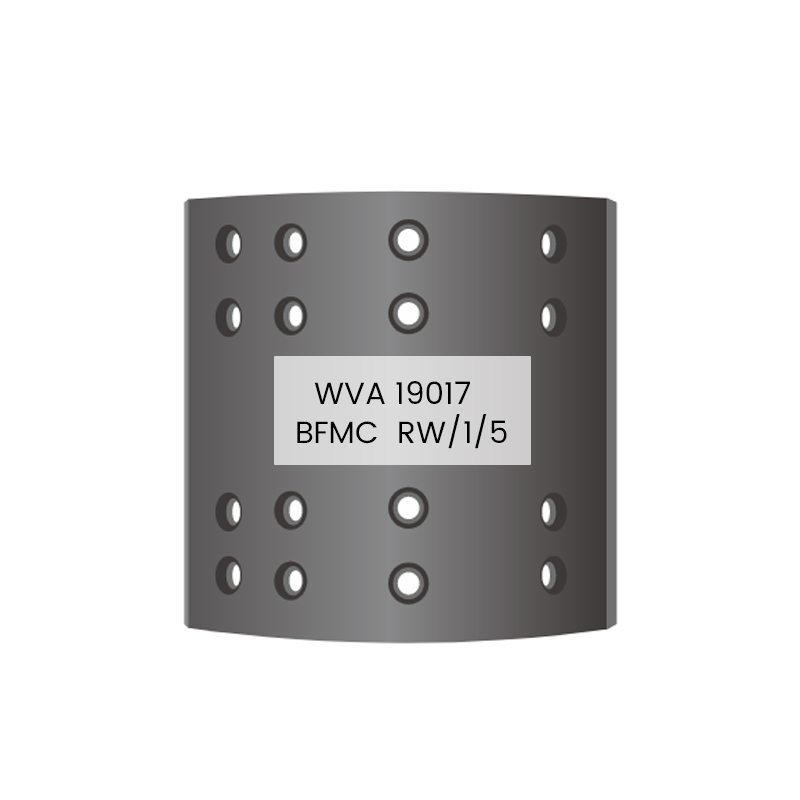
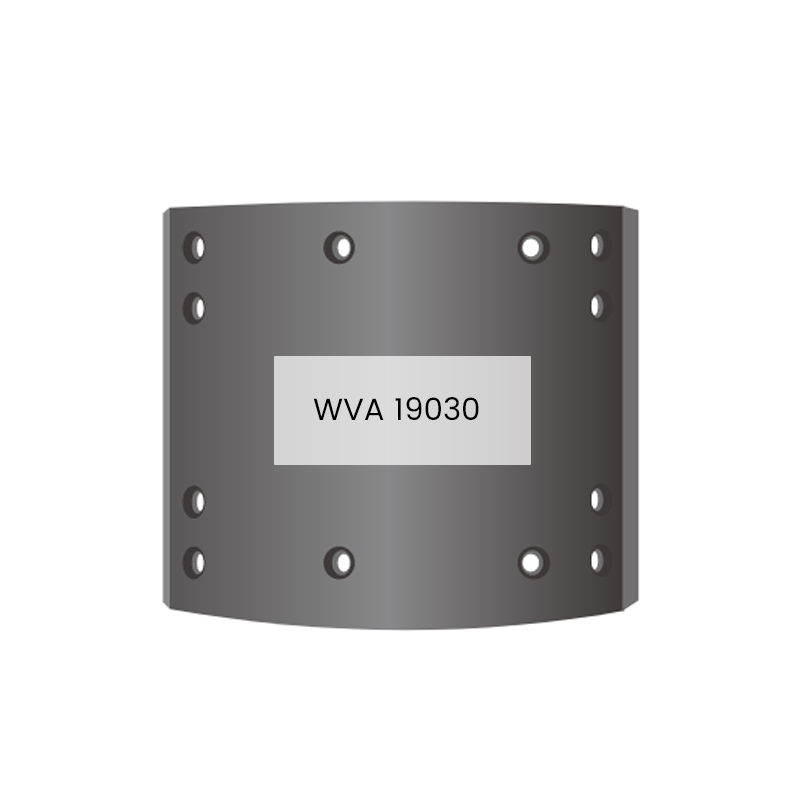
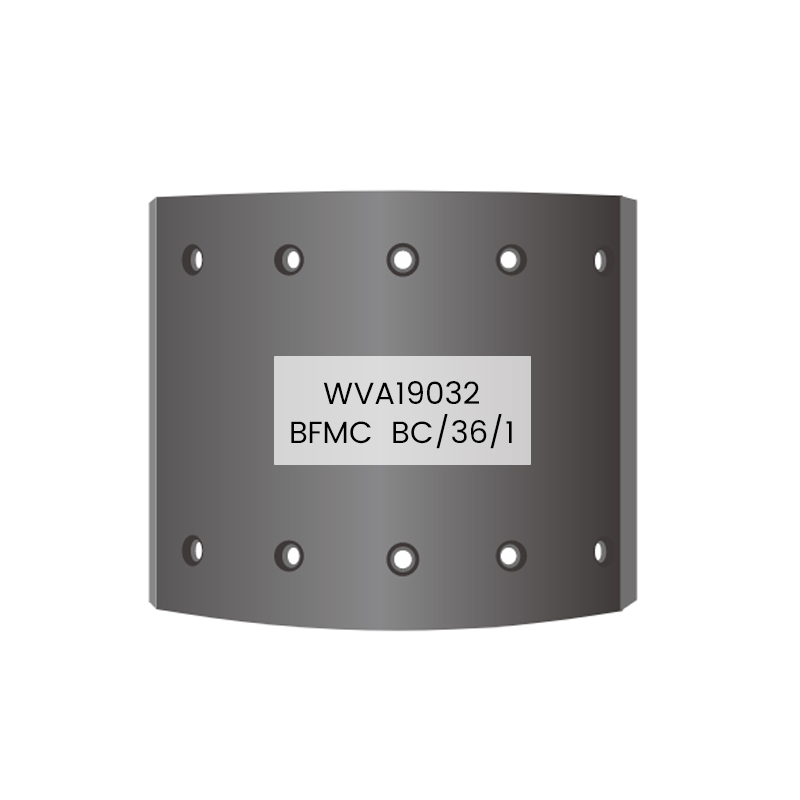
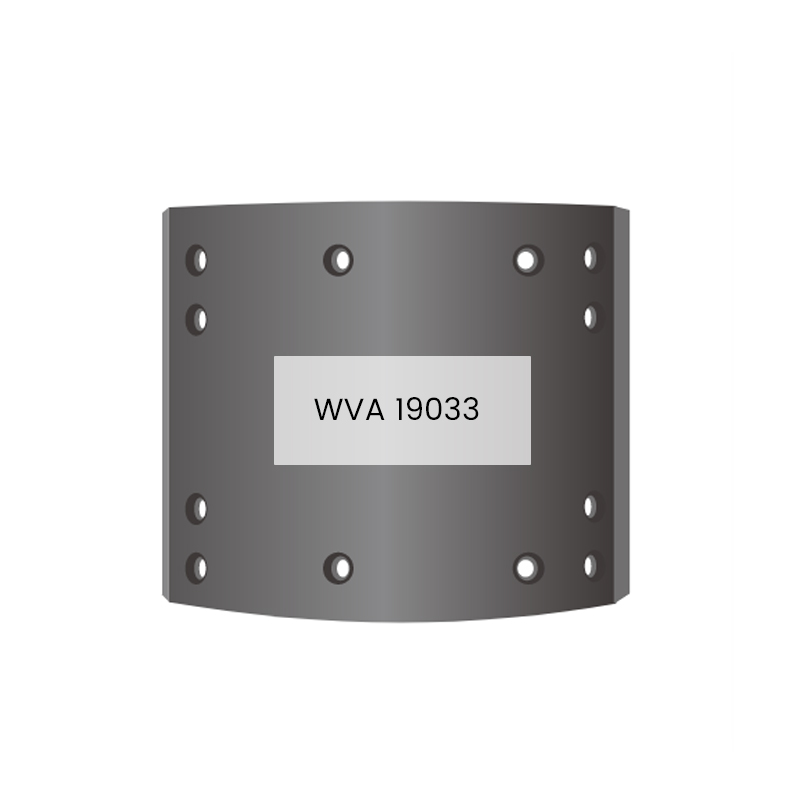
The category covers a wide family of parts. American vehicle brake lining is normally supplied as a pre-formed block or a curved strip, drilled with a defined number of holes and then riveted or bonded to a brake shoe. Because North American trucks and trailers are built to inch-based drum dimensions, the lining is usually identified by its reference number or edge code rather than by the truck model alone, which is why catalogue experience matters as much as mechanical knowledge in this trade.
Content
- 1 What Sets American Vehicle Brake Lining Apart
- 2 American Brake Lining Reference Numbers at a Glance
- 3 Friction Materials and Edge Codes Behind the Numbers
- 4 How to Choose the Right American Vehicle Brake Lining
- 5 Installation, Break-In and Wear Signals
- 6 Sourcing American Vehicle Brake Lining in Volume
- 7 Key Takeaways
What Sets American Vehicle Brake Lining Apart
The first practical difference is measurement. American drum brake systems are described in inches: drum diameters such as 15 in, 16.5 in and 18 in, widths of 5 in, 6 in, 7 in, 8 in and 10 in, and lining thickness expressed either in fractions of an inch or converted to millimetres for export catalogues. A buyer who works mainly with metric European references will usually keep a conversion chart on the desk for the first few months.
The second difference is the way parts are named. Reference numbers such as 1308, 4311J, 4515EA, 4551BC, 4702C, 4705A, 4707A, 4709 and 4720A are the working language of the aftermarket, and each one implies a particular block length, thickness and hole pattern. Suffixes matter: an "A" or "C" variant may differ in friction formulation, chamfer or thickness, while a "J" often signals a specific drilling. Hole count is equally important, with 14-hole, 16-hole and 18-hole blocks all in common use.
The third difference is duty cycle. A lining that performs well on a delivery truck in mild conditions can glaze and fade on a mining haul truck working a steep ramp all day. That is why the same nominal size frequently exists in several formulations, and why a supplier who understands your application is worth more than a supplier who simply quotes the lowest number.
If you are new to the category, a general primer on exploring the American vehicle brake lining is a sensible starting point before you dig into dimensional data.
American Brake Lining Reference Numbers at a Glance
The table below is not a full catalogue. It is a quick orientation to the reference families that come up most often in North American drum brake service. Use it to narrow down what a customer is asking for, then confirm every dimension against the drum, the shoe and the original specification before you order.
| Reference | Common Duty | Typical Block Format | Notes for Buyers |
|---|---|---|---|
| 1308 | Medium-duty and utility drum brakes | Pre-drilled block | Long-running general replacement reference |
| 4311J | Heavy truck drive axles | Drilled block | Suffix points to a specific drilling and thickness |
| 4515EA | Heavy-duty drive and trailer axles | Drilled block | Often ordered alongside 4515EC in mixed fleets |
| 4551BC | Heavy truck and trailer service | Drilled block | Frequently paired with 4551BA |
| 4702C | Ford and Iveco applications | Drilled block | Check against 4702A in older catalogues |
| 4707A | Heavy-duty truck axles | Drilled block | High-temperature variants also available |
| 4709 | Heavy-duty truck | 14-hole block | Hole count must match the shoe exactly |
| CA32 / DC332 | Later model American drum brakes | Drilled block | Confirm shoe width before ordering |
References such as 4515EA and 4515EC sit in the middle of the heavy-duty range and turn up on both drive axles and trailer axles, which is precisely why fitment confirmation matters so much. A block that looks identical on the shelf can differ by a few millimetres of thickness or by the position of two rivet holes, and that difference shows up as noise, uneven wear or a cracked block within a few thousand kilometres.
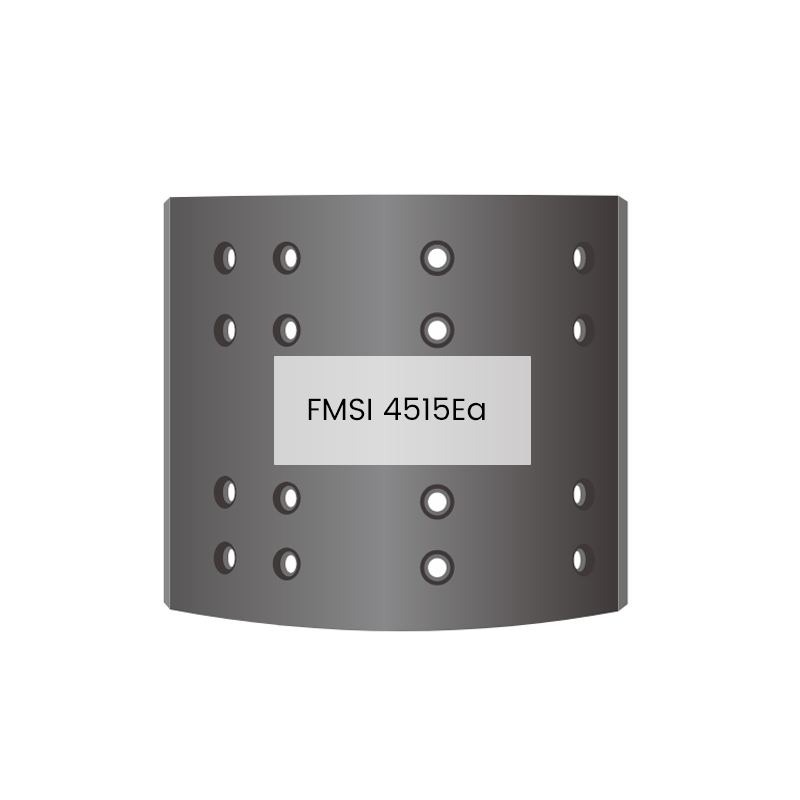 4515Ea Heavy Duty Truck Brake LiningThe FMSI 4515Ea brake pads feature exceptional braking sensitivity and reliable spot braking—critical for heavy-duty trucks in dynamic scenarios. When dealing with sud...View Product →
When a reference family is shared between tractors and trailers, always record the axle position, the drum diameter and the shoe width on the order. It takes a minute and saves a returned shipment.
Friction Materials and Edge Codes Behind the Numbers
Two linings with the same dimensions can behave completely differently, because the dimensions only describe the shape. The material compound describes the performance, and the market offers three broad families for American heavy-duty drum brakes.
Non-asbestos organic (NAO)
NAO linings use organic fibres, fillers and friction modifiers in a resin binder. They are generally gentle on drums, quiet in service and well suited to medium-duty trucks, buses and stop-and-go delivery routes. Their thermal ceiling is lower than semi-metallic compounds, so they are rarely the first choice for long, heavy mountain descents.
Semi-metallic
Semi-metallic linings carry a substantial steel or iron content. They handle heat well, resist fade under sustained braking and are the traditional workhorse for Class 7 and Class 8 trucks and for trailer axles. The trade-off is greater drum wear and slightly more noise, which most heavy fleets accept in exchange for durability.
Ceramic and hybrid compounds
Ceramic-enhanced and hybrid formulations aim for stable friction across a wide temperature range with less drum scoring. They cost more per set, so they tend to appear where downtime is expensive or where noise complaints matter, such as urban buses and premium fleet service.
Edge codes give you a short-hand performance signal. The two letters printed on the edge of a lining describe its nominal friction coefficient, first at normal temperature and then at high temperature. A code beginning with F indicates a higher friction level than one beginning with E, and a G indicates a higher level still. Matching the original edge code is a fast sanity check when two candidate blocks look the same.
How to Choose the Right American Vehicle Brake Lining
Experienced buyers rarely guess. They work through a short, repeatable checklist.
- Identify the axle and brake position, including steer, drive or trailer, and left or right.
- Measure the drum diameter and record the maximum diameter allowed by the manufacturer.
- Measure the shoe width and confirm the block length and thickness against the original lining.
- Count the rivet holes and check their spacing against the shoe web.
- Confirm the friction edge code and decide whether the duty cycle calls for NAO, semi-metallic or a hybrid compound.
- Check whether the application calls for a riveted or a bonded shoe, since the two are not interchangeable without the right equipment.
- Verify certification and traceability documentation before the order is released.
For a mainstream medium-duty replacement such as the 1308 reference, these seven steps are usually enough to get the specification right the first time.
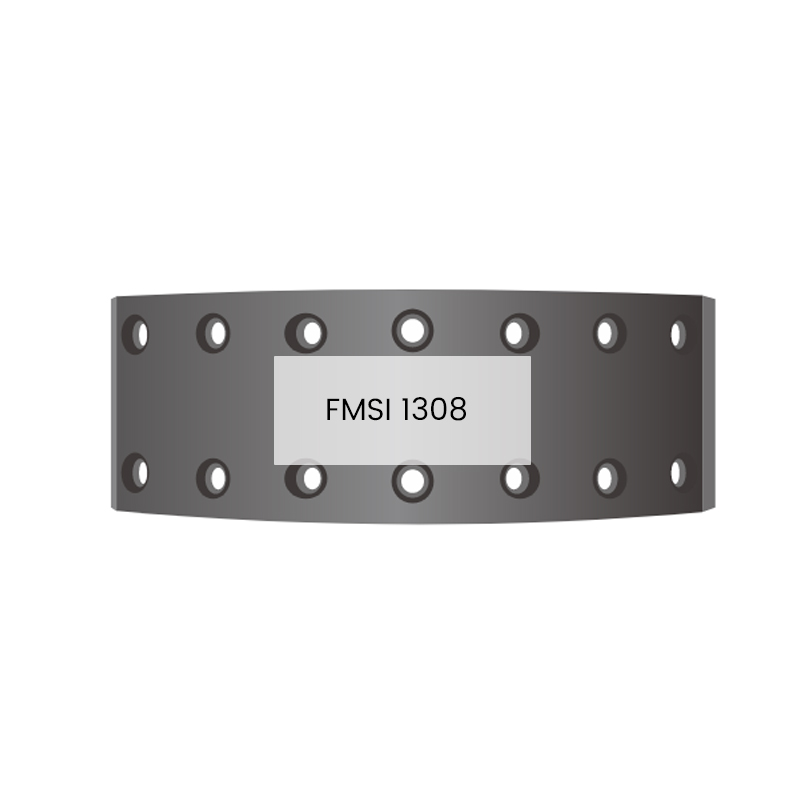 1308 Brake lining Auto Brake system partsThe FMSI 1308 comes with high-quality anti-vibration and anti-noise accessories, designed to minimize noise and shaking as much as possible. Specially crafted damping ...View Product →
For heavier applications, add one more question: what happens to this lining on the worst day of the year, with a full load and a long descent? If the answer is uncertain, step up to a higher thermal capacity compound.
Installation, Break-In and Wear Signals
Correct fitment is only half of the job. Drum condition decides how the new lining will perform. Before installation, inspect the drum for out-of-round, deep scoring, heat checking and cracks, and confirm it is still inside the discard limit. Clean the shoe platform, check the rivet depth or bonding integrity, and replace worn return springs, rollers and hardware rather than reusing tired components.
After assembly, a short break-in period lets the lining conform to the drum surface. Moderate, progressive stops during the first few hundred kilometres build a stable friction film. Harsh stops too early can glaze the surface and leave the brake with reduced bite for the rest of its life.
Once in service, watch for these signals that replacement is due:
- Lining thickness below the manufacturer's minimum, measured at the thinnest point.
- Uneven wear between the leading and trailing shoe, which points to hardware or adjustment problems.
- Cracks, edge chipping or rivets standing proud of the friction surface.
- Oil or grease contamination, which cannot be cleaned out of a friction block.
- Glazing, a hard shiny surface that reduces friction and increases stopping distance.
- Pulling to one side, vibration or a burning smell after normal braking.
Replace linings per axle rather than individually, keep friction levels matched side to side, and record every change by reference number. Over a few years that record becomes a reliable guide to which compound lasts longest on which route.
Sourcing American Vehicle Brake Lining in Volume
Zhejiang Kooying Autoparts Co., Ltd. manufactures truck friction materials at its facility in Huzhou, Zhejiang, where roughly 43,000 square metres of production space supports an annual supply of more than 15 million sets of brake linings and brake pads. More than 30 percent of that output is exported to Europe, the Americas, Africa, the Middle East and Southeast Asia, so inch-based American references are part of our everyday catalogue rather than a side line.
Our American vehicle brake lining range is organised by reference number, which makes it straightforward for importers and distributors to match an existing part number, compare dimensions and build a repeatable stock list. Because we also produce brake shoes, clutch facing, brake fluid, high temperature grease, rivets, repair kits and brake belts, a single order can cover a complete drum brake service rather than just the friction block.
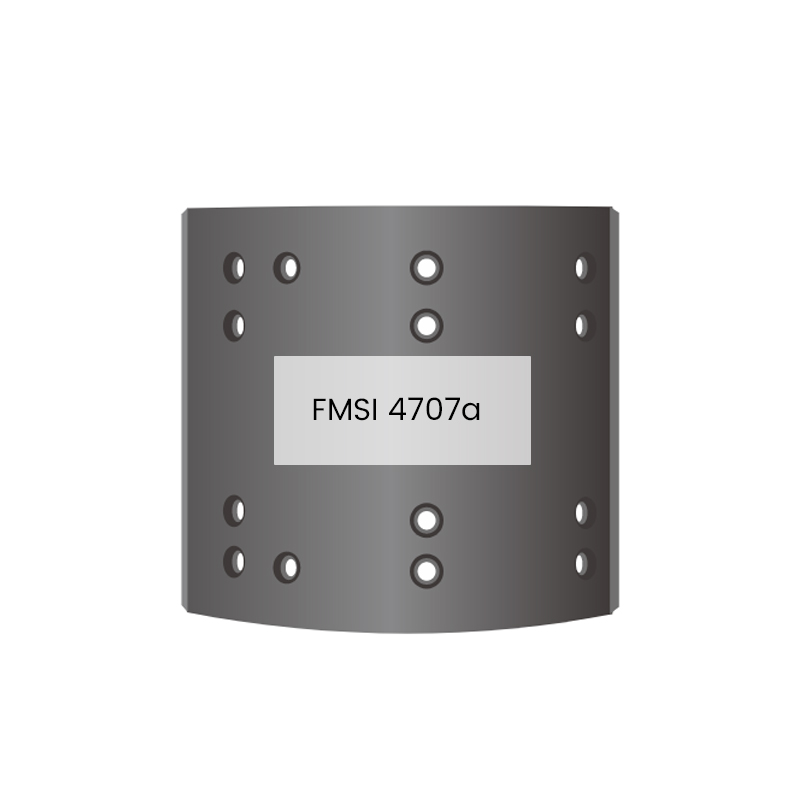 4707a Heavy Duty Truck Brake LiningAdopting a patented metal-free formula, the FMSI 4707a fully meets the high comfort requirements for braking, especially for drivers seeking a smooth and quiet experie...View Product →
Quality control runs through the whole process, supported by an IATF 16949:2016 quality management system and in-house testing against the relevant friction material standards. If you would like to see how the blocks are made and packed, you are welcome to look through our manufacturing facility and then send us the reference numbers you buy most often.
Key Takeaways
American vehicle brake lining rewards careful specification more than clever negotiation. Work in inches, confirm the reference number, hole count and edge code against the drum and shoe, choose the compound for the real duty cycle, and install it on clean, in-spec hardware. Do that consistently and you will see fewer comebacks, longer drum life and a brake that behaves the same on the tenth descent as it did on the first.