 English
 中文简体
中文简体Every drum brake and disc brake on the road comes down to one small, unglamorous component: the brake lining. It is the friction material, bonded or riveted to a brake shoe or a backing plate, that turns motion into heat and brings a loaded truck, a city bus or a wind turbine rotor to a controlled stop. When it is specified well, nobody notices it. When it is specified badly, everybody notices.
We work on the production side of that part every day. Zhejiang Kooying Autoparts makes friction material in Huzhou, Zhejiang, on the shore of Taihu Lake, and our brake linings, brake pads and brake shoes leave the plant at more than 15 million sets a year, with over 30 percent shipped to customers in Europe, the Americas, Africa, the Middle East and Southeast Asia. More of that background sits in our company profile. What follows is what the workshop floor and the test bench have taught us about how linings behave, how to choose them and how to keep them working.
Content
- 1 What a Brake Lining Actually Does Inside the Brake
- 2 How Brake Linings Are Made, and What the Material Choice Changes
- 3 Matching the Lining to the Vehicle and the Route
- 4 Reading OE Numbers and Building a Working Parts List
- 5 Installation Habits That Decide How Long a Lining Lasts
- 6 Warning Signs That a Brake Lining Is Nearing the End
- 7 What Quality Certificates Tell a Buyer
- 8 Sourcing Brake Lining as a Long-Term Decision
What a Brake Lining Actually Does Inside the Brake
In a drum brake, the lining is the curved friction block attached to the brake shoe. When the wheel cylinder pushes the shoe outward, the lining rubs against the inside face of the rotating drum. In a disc brake, the same material is bonded to a flat steel backing plate to form a brake pad, and a caliper squeezes it against the rotor.
Either way the physics is identical. Kinetic energy becomes heat, the vehicle slows, and the lining wears away a little in the process. Friction stability, fade resistance, wear rate, noise and drum life all come back to one trade-off: how much grip the material generates, and how gracefully it copes with the heat that grip creates.
That is why a lining that feels perfect on a delivery van can be a poor choice on a forty-tonne tractor-trailer. Different vehicles place very different thermal loads on the same square centimetre of friction material.
How Brake Linings Are Made, and What the Material Choice Changes
Almost every commercial brake lining is a composite. Fibres give it strength, binders hold the mix together, friction modifiers shape the grip curve, and fillers control cost and noise. The proportions are what separate one product family from another.
| Material family | What usually goes into it | Heat behaviour | Drum or rotor wear | Where it fits best |
|---|---|---|---|---|
| Non-asbestos organic (NAO) | Organic and glass fibres with mild binders and non-metallic fillers | Moderate; friction can fall away above roughly 300 degrees Celsius | Gentle | Buses, city delivery, noise-sensitive routes |
| Semi-metallic | Steel fibre, iron powder, graphite and harder binders | Strong and stable when hot, with good recovery after repeated stops | Higher | Heavy trucks, trailers, mountain and long-haul duty |
| Ceramic-enhanced | Ceramic fibres, low-copper or copper-free formulations | Very stable, fast recovery, minimal fade | Low to moderate | Premium fleets, wind turbine and industrial braking |
None of these families is automatically better. A fleet running steady highway miles usually gets longer service from a semi-metallic block, while a municipal bus operator fighting brake squeal may be happier with an organic or ceramic-enhanced lining. The honest answer is that the right compound depends on the axle, the load, the route profile and the replacement interval the workshop can realistically keep.
Matching the Lining to the Vehicle and the Route
Once the material family is settled, fitment decides everything else. Our catalogue is organised by vehicle family and OE reference, because that is how workshops, importers and fleet buyers place orders: they look up the axle or the truck model first and the compound second.
American Trucks and Heavy Trailers
North American drum brakes lean on a familiar set of block numbers, and the hole pattern matters as much as the block size. A block drilled for sixteen holes will not swap into an axle drilled for fourteen, and thickness specifications differ by a millimetre or two between axle builders. Fleets with mixed trailer pools usually do better by standardising on a handful of references that cover most of their equipment.
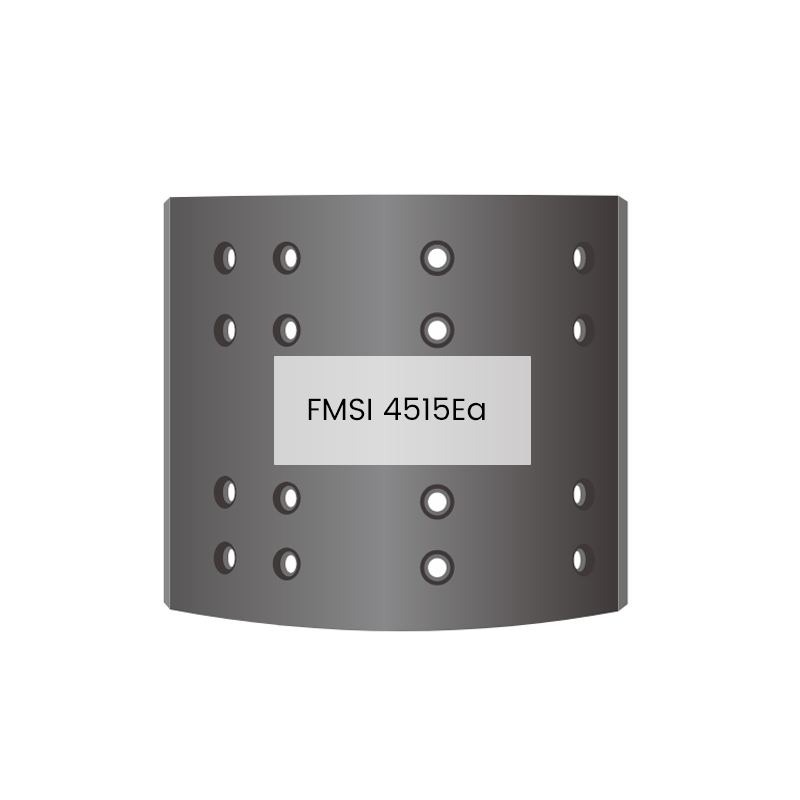 4515Ea Heavy Duty Truck Brake Lining for American VehiclesFMSI 4515Ea lining is positioned for heavy-duty trucks needing responsive spot braking and reduced rotor wear in frequent-stop urban and highway use.View Product →
European Trucks and Trailer Axles
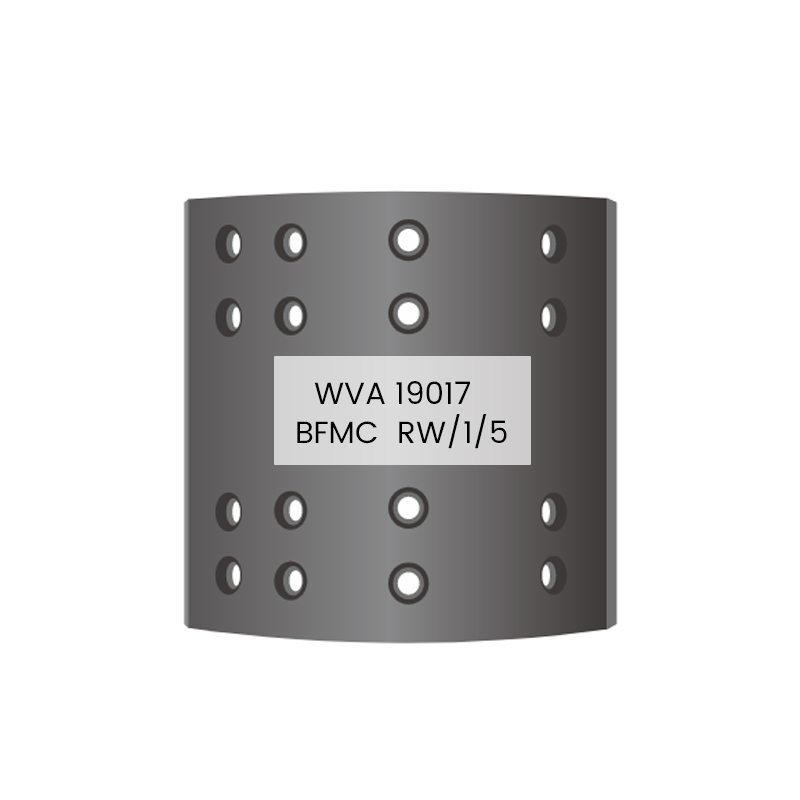
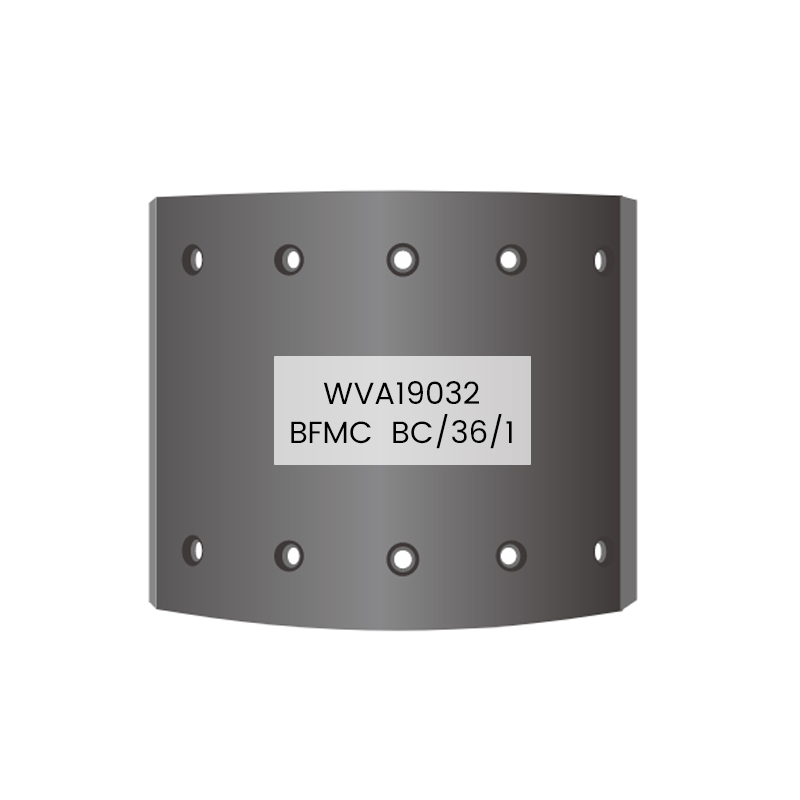
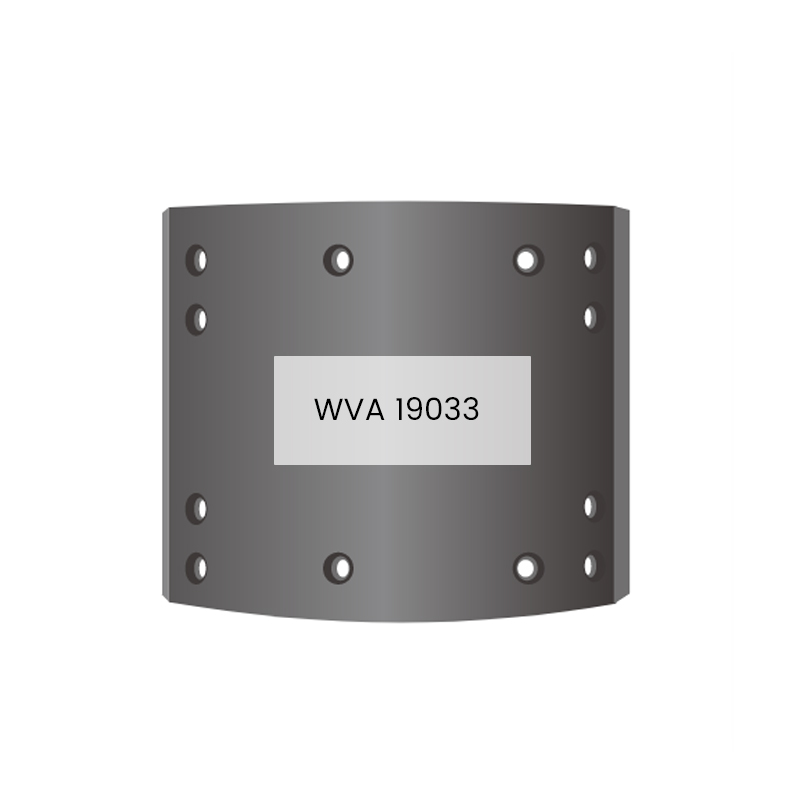
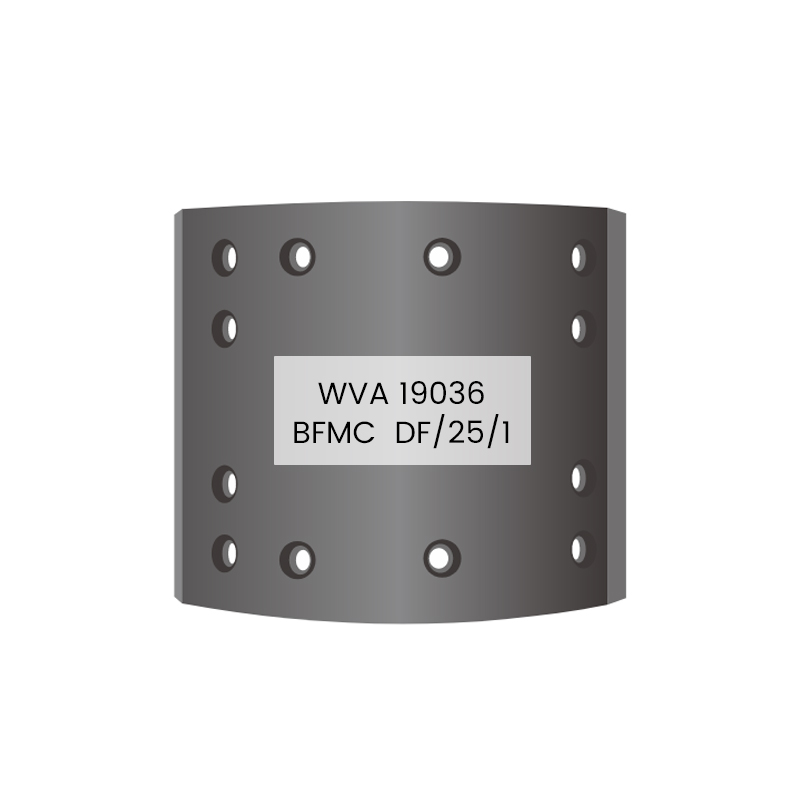
European references are normally quoted against both the original block number and the axle or brake maker's own code, so the same physical block can travel under two or three numbers depending on the vehicle it was fitted to. That is why a reliable cross-reference matters more than a long description. Our European programme covers the main tractor and trailer axles used across long-haul and regional duty.
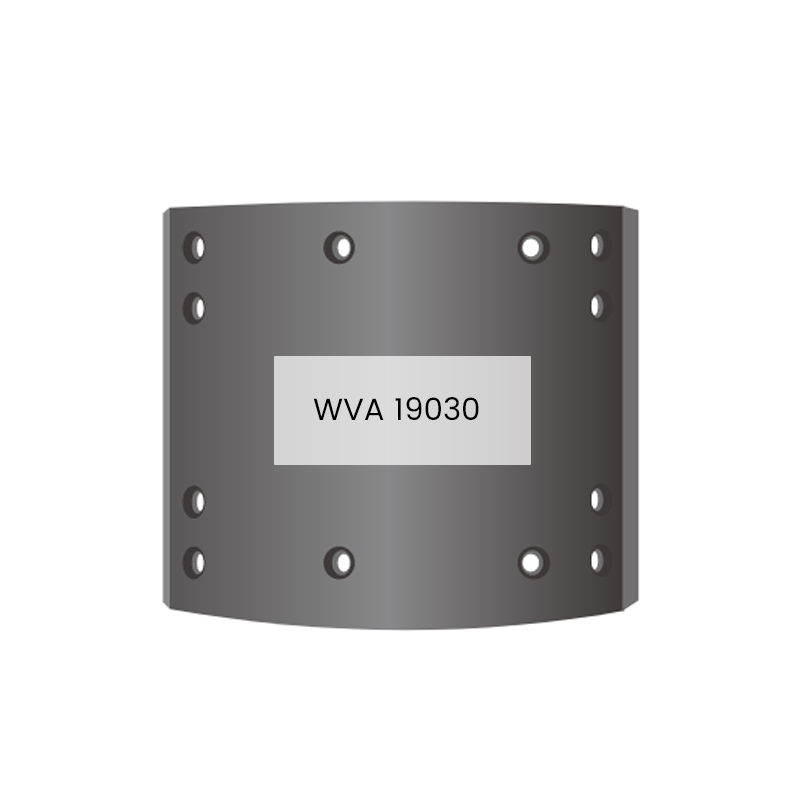 19030 Premium Heavy Duty Truck Brake Lining for European VehiclesEuropean Vehicle Brake Lining 19030 for heavy-duty trucks, offering high-temperature resistance and durable semi-metallic or ceramic friction material for long-haul and urban operations.View Product →
Off-Highway, Mining and Wind Turbine Duty
Not every brake lining ends its life on a highway. Mine haul trucks, port equipment and wind turbine yaw and rotor brakes all rely on friction material, but the duty cycle is different: fewer stops, far higher torque, and long periods standing still in the weather. Here the deciding factors are holding force at very low speed and resistance to moisture and corrosion, rather than fade behaviour on a long descent.
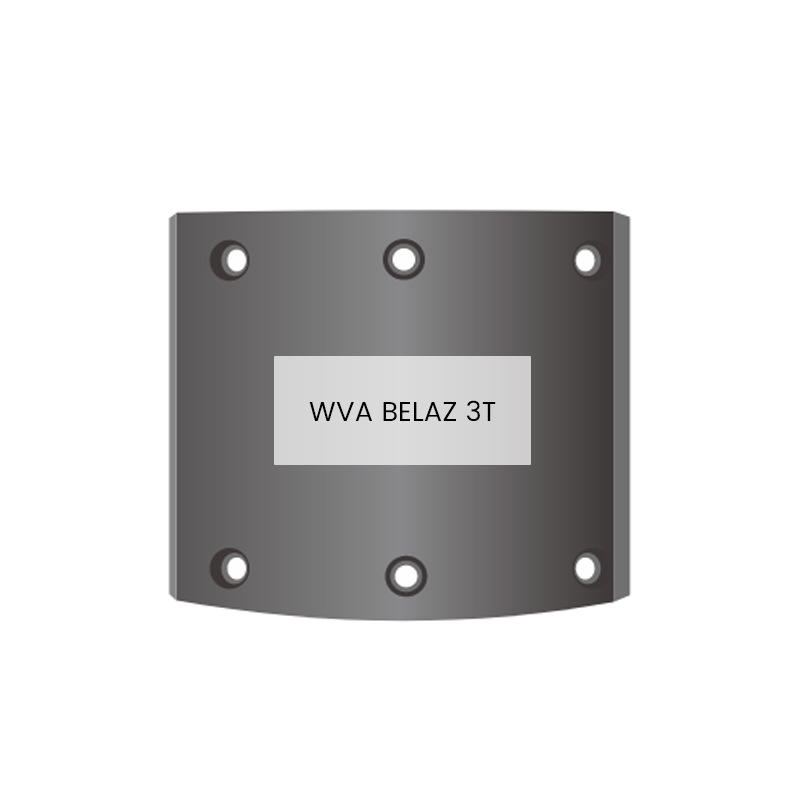 BELAZ 3T Truck Brake Lining for Heavy-Duty Industrial BrakingReplacement lining for BELAZ 3T trucks, made with asbestos-free semi-metallic or ceramic friction material and ISO/TS certified for heavy-duty braking service.View Product →
Reading OE Numbers and Building a Working Parts List
A practical habit from our order desk: build the list around the vehicles you actually see. For each one, note the block number, the lining thickness and the hole pattern, and keep that cross-reference sheet where the counter staff can reach it. If two references look almost identical, measure instead of guessing, because a lining that sits a couple of millimetres too thin will heat up faster and wear out sooner.
It also helps to buy from a source that groups products the way you search. Our full brake lining range is sorted by vehicle family, with separate sections for American, European, Japanese, Korean and Chinese vehicles as well as an existing-models directory for less common equipment, so an OE number usually leads straight to the matching block.
Installation Habits That Decide How Long a Lining Lasts
Most premature lining failures we are asked about are not material failures at all. They come from the work around the lining. A few habits prevent the majority of them:
- Clean and inspect the drum or rotor first. Deep scoring, out-of-round drums and hard spots will shorten the life of any new lining.
- Replace linings as matched axle sets, not one wheel at a time, so braking force stays even left to right.
- Check the hardware while you are in there: return springs, rollers, camshafts and automatic adjusters are cheap compared with a second repair.
- Bed new linings in with a period of moderate, progressive braking rather than a hard stop straight out of the bay.
- Store linings flat, dry and away from oil, grease and direct sunlight, and never handle friction surfaces with bare greasy hands.
Warning Signs That a Brake Lining Is Nearing the End
Drivers and fitters tend to notice the same sequence of symptoms. If any of these appear, the lining is worth measuring before the next long run:
- Rivets or the backing plate visible through the remaining friction material.
- Longer stopping distances, or a brake pedal that feels lower than usual.
- Squealing, grinding or a rhythmic scraping that changes with wheel speed.
- Pulling to one side under braking, which often points to uneven lining wear or a sticking cylinder.
- Visible cracks, glazing or oil contamination on the friction surface.
- A drum or rotor that runs noticeably hotter on one side after a normal stop.
What Quality Certificates Tell a Buyer
Friction material is hard to judge by looking at it, which is why buyers fall back on documentation. Our plant operates under IATF 16949:2016, and our linings, pads and shoes are tested against the performance requirements of GB5763-2018 and the QC/T25-2004 and QC/T27-2004 standards for brake linings and pads, with random sampling carried out through a national testing centre. None of that replaces a road test, but it does tell you whether a supplier has a repeatable process behind the product.
Sourcing Brake Lining as a Long-Term Decision
Brake lining is a consumable, so the purchasing decision rarely ends with one order. What matters over a few years is whether the supplier can keep the same compound, the same thickness and the same drilling available, season after season, while still covering the new models your customers bring in. That is the part of the job we have concentrated on from our 43,000 square metre site in Huzhou, and it is the reason we still spend our days measuring, testing and re-checking friction blocks. If you are putting a lining programme together, we are glad to compare notes on the references you need.