 English
 中文简体
中文简体Content
- 1 Why Brake Pads for Trucks Are Different from Passenger Car Pads
- 2 Types of Brake Pads for Trucks
- 3 Key Specs to Check When Buying Truck Brake Pads
- 4 How to Tell When Your Truck Brake Pads Need Replacing
- 5 Truck Brake Pad Replacement Intervals
- 6 Choosing the Right Brake Pad for Your Specific Truck Application
- 7 Step-by-Step Guide to Replacing Truck Brake Pads
- 8 Common Mistakes to Avoid With Truck Brake Pads
Why Brake Pads for Trucks Are Different from Passenger Car Pads
A brake pad for a truck is not just a bigger version of a passenger car brake pad. Trucks — whether light-duty pickups, medium-duty work trucks, or heavy-duty semi-trucks — place fundamentally different demands on their braking systems. The combination of higher gross vehicle weight, frequent towing and hauling loads, stop-and-go driving under load, and longer braking distances required at highway speeds means that truck brake pads must be engineered to absorb and dissipate far more heat energy per stop than a typical car pad ever encounters.
A fully loaded Class 8 semi-truck can weigh up to 80,000 lbs (36,000 kg) — roughly 20 times the weight of an average passenger car. Even a light-duty pickup truck towing a loaded trailer can easily double its normal braking load. When a vehicle is heavy, the kinetic energy that must be converted to heat during braking increases proportionally with weight. This means the friction material in a truck brake pad must withstand sustained high temperatures — sometimes exceeding 600°C (1,100°F) during repeated heavy stops — without fading, cracking, or glazing.
Beyond heat tolerance, truck brake pads must also balance wear life, noise characteristics, rotor compatibility, and regulatory compliance. In commercial trucking, brake performance is directly tied to legal liability, driver safety, and DOT compliance during roadside inspections. Choosing the wrong brake pad compound for a truck application doesn't just mean faster wear — it can mean brake fade when it matters most, failed inspections, or rotor damage that turns a pad replacement into a much more expensive brake job.
Types of Brake Pads for Trucks
Truck brake pads are categorized primarily by the friction material used in their construction. Each material type has a distinct performance profile with specific strengths and trade-offs. Understanding these differences is the foundation of making the right choice for your truck and application.
Semi-Metallic Brake Pads
Semi-metallic brake pads contain between 30% and 65% metal content — typically a blend of steel wool, copper fibers, iron powder, and other metal particles — bound together with a resin. This high metal content gives them excellent heat conductivity, allowing heat to transfer away from the friction surface quickly during hard braking. Semi-metallic pads offer strong stopping power across a wide temperature range and are highly durable, making them one of the most popular choices for heavy-duty trucks, tow vehicles, and commercial applications.
The trade-offs with semi-metallic pads are increased noise (metallic squeal is common, especially when cold), higher rotor wear due to the abrasive metal content, and reduced performance at very low temperatures until the pad warms up. For trucks that do a lot of heavy work — construction, towing, mountain driving — semi-metallic pads are often the recommended choice because of their thermal stability under repeated high-load stops.
Ceramic Brake Pads
Ceramic brake pads are made from dense ceramic fibers, bonding agents, and small amounts of copper or other metal filaments. They are significantly harder and more heat-resistant than organic pads, and they produce finer, lighter-colored brake dust that doesn't stick to wheels as badly as the dark dust from semi-metallic pads. Ceramic pads are known for quiet operation, consistent performance, and long wear life under normal and moderate driving conditions.
For light-duty trucks and pickups used primarily as daily drivers or light haulers, ceramic brake pads are an excellent choice. However, ceramic pads have limitations in extreme high-heat applications. Under severe repeated braking — such as descending a long mountain grade with a heavy trailer — ceramic pads can reach their thermal limits faster than semi-metallic pads and may exhibit more fade. They are also generally more expensive than semi-metallic alternatives. Some high-performance ceramic truck pads are specifically formulated for towing duty, offering improved heat tolerance over standard ceramic compounds.
Non-Asbestos Organic (NAO) Brake Pads
Non-asbestos organic (NAO) brake pads — sometimes called organic or non-metallic pads — are made from materials such as glass fibers, rubber compounds, carbon, and Kevlar, bound with resin. They are the softest and quietest of the main pad types, generating good initial bite and gentle rotor wear. However, their lower heat tolerance and faster wear rate make them poorly suited for heavy truck applications, towing, or high-stress braking environments.
NAO pads are generally found only in light-duty or entry-level replacement parts for pickup trucks used in low-demand applications. Most professional truck operators and anyone who regularly tows or hauls significant loads will quickly wear through organic pads and may experience brake fade under moderate load. They are not recommended for commercial trucking or any heavy-duty application.
Low-Metallic NAO Brake Pads
Low-metallic NAO pads sit between organic and semi-metallic in the performance spectrum. They contain 10% to 30% metal content, improving heat transfer and stopping power compared to standard organic pads while remaining quieter and less abrasive than full semi-metallic compounds. For light-duty truck owners who want better performance than organic pads but find full semi-metallic pads too noisy or rough on rotors, low-metallic pads can be a good middle-ground option.
Key Specs to Check When Buying Truck Brake Pads
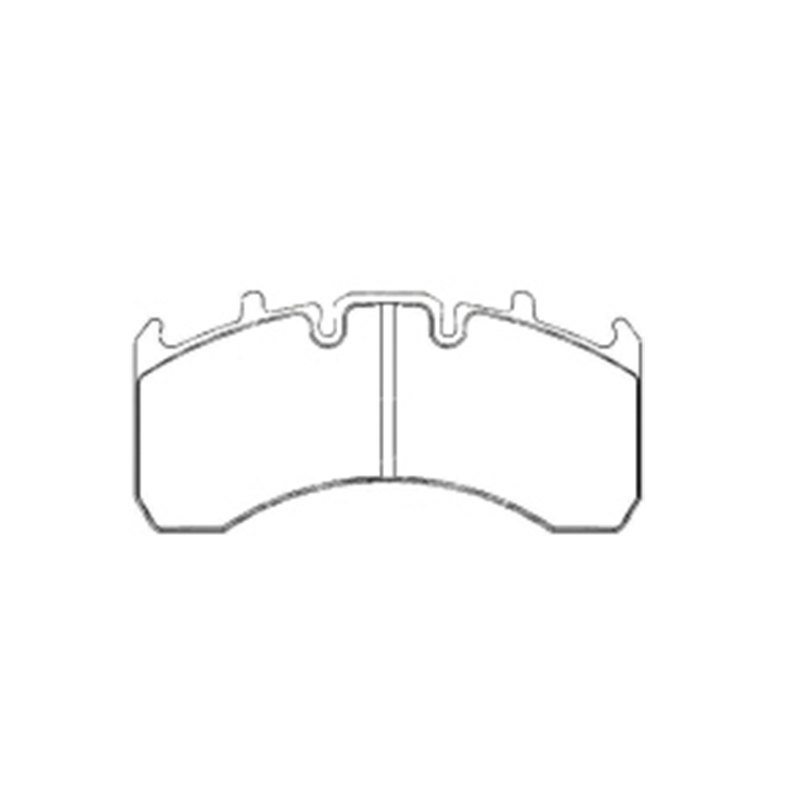
Once you know the friction material type you need, there are several additional specifications that determine whether a specific brake pad is the right fit for your truck and how it will perform in service:
| Specification | What It Means | Why It Matters for Trucks |
| FMSI/D-Number | Standardized pad shape and dimension code | Ensures correct fitment in the caliper bracket |
| Friction Coefficient (µ) | Measure of braking grip (typically 0.35–0.55) | Higher µ = stronger bite but more rotor wear |
| Edge Code (SAE J866) | Two-letter code stamped on pad edge indicating friction class | Matches pad friction level to vehicle brake system design |
| Operating Temperature Range | Temperature range where pad performs reliably | Critical for towing and mountain driving applications |
| Pad Thickness (mm) | Total friction material thickness new | Thicker pads = longer service life between replacements |
| Shim and Hardware Included | Whether noise-dampening shims and abutment clips are included | Affects noise, vibration, and installation quality |
| OEM or Aftermarket | Whether pad meets original equipment specifications | OEM-spec pads ensure consistent braking feel and rotor compatibility |
How to Tell When Your Truck Brake Pads Need Replacing
Truck brake pads wear gradually over time, and catching the warning signs early prevents rotor damage, increased stopping distances, and dangerous brake failure. Here are the key indicators that your truck's brake pads are due for inspection or replacement:
- Squealing or squeaking noise when braking: Most truck brake pads incorporate a small metal wear indicator tab that contacts the rotor surface and produces a high-pitched squeal when the friction material wears down to approximately 2–3mm. This noise is intentional — it's your warning signal. Don't ignore it.
- Grinding or metal-on-metal sound: If squealing has progressed to grinding, the friction material is completely worn through and the metal backing plate is contacting the rotor directly. This causes rapid rotor damage and dramatically compromised stopping power. This is a safety emergency requiring immediate service.
- Increased stopping distance: If your truck takes noticeably longer to stop than usual — especially under moderate braking — worn pads, glazed pads, or brake fade from overheating may be the cause. For a loaded truck, longer stopping distances are particularly dangerous.
- Brake pedal pulsation or vibration: If the brake pedal pulses or vibrates under braking, this often indicates warped rotors caused by uneven heat distribution from worn or mismatched brake pads — another sign it's time for a brake service.
- Visual inspection through the wheel: On many trucks, you can see the brake caliper and rotor through the wheel spokes without removing the wheel. The outer brake pad is visible pressed against the rotor. If the friction material appears thinner than 3mm (about the thickness of a coin), replacement is due.
- Brake warning light illuminated: Many modern trucks have electronic wear sensors embedded in the brake pad that trigger a dashboard warning light when the pad reaches its minimum thickness. This is the most direct electronic alert that replacement is needed.
- Truck pulling to one side under braking: If the truck pulls left or right when you apply the brakes, one brake pad may be wearing faster than the other, or a caliper may be sticking. Both conditions require immediate inspection to restore balanced braking.
Truck Brake Pad Replacement Intervals
There is no single universal mileage interval for truck brake pad replacement because wear rate depends heavily on operating conditions, load, driving style, terrain, and pad material. However, the following general guidelines provide a useful starting framework:
| Truck Type and Use | Typical Front Pad Life | Typical Rear Pad Life |
| Light-duty pickup, highway driving, unloaded | 50,000–70,000 miles | 60,000–80,000 miles |
| Light-duty pickup, frequent towing/hauling | 25,000–40,000 miles | 30,000–50,000 miles |
| Medium-duty work truck, urban delivery | 20,000–35,000 miles | 25,000–40,000 miles |
| Heavy-duty semi-truck, long haul highway | 100,000–150,000 miles | Variable by axle position |
| Heavy-duty semi-truck, urban/regional | 40,000–80,000 miles | Variable by axle position |
These figures are estimates — actual wear can vary dramatically. A pickup truck driven aggressively in hilly terrain while towing near its maximum rated capacity can wear through front brake pads in under 15,000 miles. Regardless of mileage, brake pads should be physically inspected at every tire rotation or oil change service interval to catch wear before it becomes a safety issue.
Choosing the Right Brake Pad for Your Specific Truck Application
The best brake pad for your truck depends on how you actually use it. Here's a practical breakdown by application type to help match the right pad to the job:
Daily Driver Pickup Truck (Light Hauling)
For a light-duty pickup used primarily as a personal vehicle with occasional light hauling, a premium ceramic brake pad is typically the best all-around choice. Ceramic pads deliver quiet operation, clean wheels, long wear life, and consistent pedal feel without the noise or rotor wear associated with semi-metallic pads. Look for pads labeled as suitable for towing or truck-specific applications, even if your typical loads are light, to ensure the compound can handle the occasional heavier braking event without issue.
Towing and Hauling Truck
If you regularly tow trailers, fifth-wheel rigs, or boat trailers near your truck's maximum tow rating, thermal performance becomes the priority. Semi-metallic pads — or specifically formulated severe-duty ceramic pads from brands like EBC Brakes (Greenstuff Truck or Yellowstuff series), Hawk Performance (HPS series), or Akebono (ProACT Ultra-Premium) — are the better choice. Look for pads with a documented operating temperature ceiling above 600°C (1,100°F), a scorching or bedding-in specification from the manufacturer, and positive reviews from users in towing applications specifically.
Commercial Work Trucks and Medium-Duty Trucks
Medium-duty trucks used in construction, utilities, or fleet service need brake pads that prioritize durability, consistent performance under varied loads, and compliance with fleet maintenance schedules. Fleet-grade semi-metallic or low-metallic pads from commercial suppliers like Bendix, Meritor, or Carlisle are purpose-engineered for this segment. Many fleet operators specify pads by the OEM edge code to maintain consistent braking characteristics across their vehicle fleet, which simplifies driver training and safety management.
Heavy-Duty Semi-Trucks and Class 7–8 Commercial Vehicles
Class 7 and 8 commercial trucks are subject to Federal Motor Carrier Safety Administration (FMCSA) brake performance regulations in the United States, and equivalent regulations in other jurisdictions. Brake pads for these vehicles must meet specific friction performance standards and are typically sourced from specialized commercial brake suppliers — Bendix, Meritor, Haldex, and Wabco are among the dominant names. Air disc brake pads for semi-trucks differ significantly from hydraulic disc brake pads used on light and medium-duty trucks, requiring pads specifically designed for the higher clamp forces and operating conditions of air disc systems.
Step-by-Step Guide to Replacing Truck Brake Pads
Replacing brake pads on a light-duty or medium-duty truck is a manageable DIY job for mechanically confident owners. Here is a general procedure that applies to most disc brake-equipped trucks:
- Gather tools and parts: You'll need a floor jack and jack stands rated for your truck's weight, lug wrench, breaker bar, C-clamp or caliper piston tool, brake cleaner spray, high-temperature brake grease, and the replacement pads (with new hardware kit if supplied). Always replace pads in axle pairs — both front or both rear at the same time.
- Loosen lug nuts before jacking: With the truck on the ground, break the lug nuts loose (but don't remove them) before raising the wheel. This prevents the wheel from spinning when you apply torque.
- Raise the truck and remove the wheel: Place the jack under the manufacturer's recommended jacking point, raise the truck, place jack stands under the frame, then remove the wheel. Never work under a truck supported only by a floor jack.
- Remove the caliper: Unbolt the caliper slide bolts (typically two 12mm or 14mm hex bolts on the back of the caliper), then slide the caliper off the rotor. Hang it from a wire hook attached to the suspension — never let it hang by the brake hose, as this can damage the hose internally.
- Remove and inspect the old pads: Slide the old pads out of the caliper bracket. Inspect the rotor surface for deep grooves, cracks, or severe scoring. If the rotor has grooves deeper than 0.4mm, or is below the minimum thickness stamped on its edge, replace the rotor as well.
- Compress the caliper piston: Before the new (thicker) pads will fit, the caliper piston must be pressed back into the caliper body. Place a C-clamp against the piston face and tighten slowly until the piston is fully retracted. Open the brake fluid reservoir cap first to allow fluid to flow back — check the reservoir doesn't overflow.
- Clean the bracket and install new hardware: Use brake cleaner and a wire brush to clean the caliper bracket contact surfaces. Apply a thin layer of high-temperature brake grease (never regular grease) to the abutment clips and slide pins. Install new abutment clips and shims if provided in the pad kit.
- Install new pads and reassemble: Clip the new pads into the bracket, slide the caliper back over the rotor, and torque the caliper bolts to the manufacturer's specification (typically 25–44 ft-lbs for light-duty trucks — always verify for your specific vehicle). Reinstall the wheel and torque lug nuts to spec in a star pattern.
- Bed in the new pads: New brake pads require a bedding-in procedure to transfer a thin, even layer of friction material onto the rotor surface. The standard bedding procedure involves 6 to 10 moderate stops from 40 mph to 5 mph with 30 seconds of cool-down time between each stop. Avoid hard stops or panic braking for the first 300–500 miles after installation.
Common Mistakes to Avoid With Truck Brake Pads
Even experienced mechanics and truck owners make mistakes with brake pad selection and installation that lead to premature wear, noise, or compromised safety. Here are the most common pitfalls to avoid:
- Using passenger car pads on a truck: Some aftermarket parts suppliers list generic pads that fit both car and truck applications by shape. Always verify the friction compound is rated for truck or towing use — a pad that fits does not mean it is designed for the thermal demands of truck operation.
- Replacing pads without inspecting rotors: Installing new pads on worn, grooved, or warped rotors leads to uneven pad transfer, noise, vibration, and accelerated pad wear. Always measure rotor thickness against the discard specification and inspect the rotor surface before fitting new pads.
- Skipping the bedding-in process: Many truck owners drive normally immediately after a brake pad replacement, including hard stops in traffic. Without proper bedding, the pad surface cannot establish uniform contact with the rotor, leading to hot spots, uneven wear, and brake judder within a few thousand miles.
- Mixing different pad compounds front to rear: Using a high-friction semi-metallic pad on the front and a lower-friction organic pad on the rear (or vice versa) creates unbalanced braking bias that can destabilize the truck under hard braking, especially when loaded or towing.
- Applying grease to the pad friction surface: Grease or any lubricant must never contact the pad friction face or the rotor braking surface. Apply brake-specific lubricant only to the pad backing plate, abutment clips, and slide pin contact areas. Contaminated pads must be replaced — they cannot be cleaned effectively.
- Ignoring brake fluid condition during pad replacement: Compressing the caliper piston during pad installation pushes old, potentially contaminated brake fluid back into the master cylinder reservoir. If the brake fluid hasn't been changed in over 2 years or shows significant discoloration, flush and replace the fluid during the brake pad service to maintain optimal brake system performance.