 English
 中文简体
中文简体Content
- 1 The Role of Brake Pads in a Wind Turbine Braking System
- 2 Types of Braking Systems That Use Wind Turbine Brake Pads
- 3 Materials Used in Wind Turbine Brake Pad Formulations
- 4 Key Performance Parameters for Wind Turbine Brake Pads
- 5 How Wind Turbine Brake Pads Wear and What Accelerates It
- 6 Inspection Intervals and How to Check Pad Condition
- 7 Selecting Replacement Wind Turbine Brake Pads: OEM vs. Aftermarket
- 8 Best Practices for Wind Turbine Brake Pad Replacement
The Role of Brake Pads in a Wind Turbine Braking System
Wind turbine brake pads are friction components that press against a brake disc or drum to slow, stop, or hold a rotating element within the turbine. Unlike automotive brake pads, which are used in short, repeated stops, wind turbine braking pads operate across several distinct systems within a single machine — each with different load profiles, duty cycles, and thermal demands. Understanding what each braking system does is the starting point for any serious maintenance or procurement decision.
The primary braking systems in a wind turbine where brake pads are used include the main rotor brake (also called the high-speed shaft brake or mechanical rotor brake), the yaw braking system, and in some designs, the pitch braking system. Each of these systems applies friction pads against a disc or drum surface, and each experiences a completely different service environment in terms of contact pressure, sliding speed, temperature, and frequency of engagement. A pad formulation that performs excellently in a yaw brake may be entirely unsuitable for a rotor brake application.
The consequence of brake pad failure in a wind turbine is severe. A compromised rotor brake pad can result in the turbine being unable to stop in an emergency stop scenario — a safety-critical failure. Worn yaw brake pads allow the nacelle to swing freely in high winds, causing uncontrolled yaw misalignment and potential structural fatigue damage to the tower and drivetrain. Proactive management of wind turbine friction pads is therefore not a maintenance preference but an operational necessity.
Types of Braking Systems That Use Wind Turbine Brake Pads
Each braking application inside a wind turbine places unique demands on the friction material. Here is a breakdown of the three main systems and what their specific operational environment looks like.
Main Rotor Brake (High-Speed Shaft Brake)
The main rotor brake is mounted on the high-speed shaft between the gearbox and the generator. It is the primary mechanical safety brake for the turbine and is designed to bring the rotor to a complete stop during maintenance, grid loss, or emergency shutdown events. Because it acts on the high-speed shaft rather than the low-speed rotor shaft directly, it operates at much higher rotational speeds — typically 1,200 to 1,800 RPM — and consequently generates significant heat during engagement. Rotor brake pads for this application must have high thermal stability, a consistent and predictable coefficient of friction across a wide temperature range, and good wear resistance under infrequent but high-energy braking events.
The rotor brake is normally engaged only a limited number of times per year for planned maintenance stops plus occasional emergency stops. However, each engagement can absorb a large amount of kinetic energy in a short period, making thermal management of the friction material critical. Pad materials that lose friction coefficient at elevated temperatures — a phenomenon called brake fade — are particularly dangerous in this application.
Yaw Brake System
The yaw brake system controls the rotation of the nacelle around the top of the tower, allowing the turbine to track changes in wind direction. Yaw brake pads operate in a very different duty cycle compared to rotor brakes. In most turbine designs, the yaw brake is continuously engaged as a holding brake while the yaw motors actively drive the nacelle into the wind — creating a controlled slip condition where the pads slide slowly against the yaw disc. This continuous low-speed sliding causes steady, predictable wear rather than the sudden high-energy events seen in rotor brakes.
Because yaw brake pads are in near-constant contact and sliding, wear rate is the dominant performance metric rather than thermal peak capacity. Pad materials with high abrasion resistance and consistent friction performance over millions of low-speed sliding cycles are required. In large multi-megawatt turbines, the yaw brake system may have 8 to 24 individual brake calipers arranged around the yaw ring, each with its own set of pads — meaning a full yaw brake pad replacement can involve a large number of individual friction components per turbine.
Pitch Brake System
In some turbine designs — particularly older stall-regulated turbines and certain direct-drive models — a dedicated pitch brake is used to hold each blade at a fixed pitch angle during normal operation or to feather the blade to a safe position during shutdown. Pitch brake pads in these designs see relatively low engagement forces but must function reliably in the hub environment, which experiences centrifugal loading, vibration, and in cold climates, sub-zero temperatures. Low-temperature performance and resistance to corrosion are particularly important selection criteria for pitch brake friction pads.
Materials Used in Wind Turbine Brake Pad Formulations
The friction material in a wind turbine braking pad is a composite — a carefully engineered mixture of multiple material categories, each contributing specific properties to the overall performance of the pad. The formulation is developed and optimized for the specific application by the pad manufacturer, and differences in formulation between suppliers can result in dramatically different performance outcomes even in pads that look identical.
Sintered Metal (Powder Metallurgy) Pads
Sintered metal brake pads are the most widely used friction material in wind turbine rotor brake applications. They are manufactured by pressing and sintering a mixture of metallic powders — typically copper, iron, tin, and graphite — under high temperature and pressure. The resulting material is extremely hard, thermally stable, and capable of maintaining consistent friction performance from ambient temperature up to 400°C or higher. Sintered pads also have very high wear resistance, giving them long service intervals even under the demanding conditions of emergency rotor braking. The main trade-off is that sintered metal pads can be more aggressive on the brake disc surface compared to organic alternatives, so disc condition must be monitored alongside pad wear.
Organic (Non-Asbestos Organic) Pads
Organic wind turbine friction pads use a resin-bonded matrix containing fibers (commonly glass, aramid, or steel wool), friction modifiers, fillers, and lubricants. They are softer than sintered pads, quieter in operation, and gentler on brake disc surfaces — making them well suited to yaw brake applications where the pad slides continuously against the disc. However, organic pads have lower thermal limits than sintered alternatives, typically degrading above 200–250°C, and they tend to wear faster under high-energy braking conditions. For yaw brakes where thermal load is modest and disc surface preservation is important, organic formulations often represent the optimal balance.
Semi-Metallic Pads
Semi-metallic brake friction pads combine metallic fibers (typically 30–65% steel or copper fiber by weight) with organic binders and modifiers. They offer a performance profile between fully sintered and fully organic pads — better thermal capacity than organic pads, but less disc aggressive than fully sintered formulations. Semi-metallic pads are commonly used in pitch brake and yaw brake applications on mid-size turbines where a balance of wear life, thermal tolerance, and disc protection is needed. They are also used in retrofit applications where an operator is replacing an OEM sintered pad with a longer-service alternative that is easier on the disc.
Key Performance Parameters for Wind Turbine Brake Pads
When evaluating wind turbine brake pad specifications — whether from an OEM supplier or an aftermarket manufacturer — these are the parameters that directly determine suitability for a given application:
| Parameter | Typical Range | Why It Matters |
| Coefficient of Friction (μ) | 0.35 – 0.50 | Determines braking torque for a given clamping force |
| Friction Stability (μ variation) | < ±15% across operating range | Consistent stopping performance; prevents brake fade |
| Maximum Operating Temperature | 250°C – 450°C | Determines suitability for high-energy braking events |
| Compressive Strength | ≥ 80 MPa | Resistance to deformation under high caliper clamping forces |
| Wear Rate | < 0.5 cm³/MJ (energy-specific) | Determines service interval and replacement frequency |
| Shear Strength (pad-to-backing plate) | ≥ 5 MPa | Prevents friction material separating from the steel backing |
| Minimum Operating Temperature | –40°C to –20°C | Cold-climate performance — critical for offshore and arctic sites |
| Hardness (Shore D or HRR) | Varies by material type | Indicator of disc aggressiveness and abrasive wear behavior |
How Wind Turbine Brake Pads Wear and What Accelerates It
Understanding wear mechanisms helps maintenance teams predict replacement intervals more accurately and identify when operating conditions are causing abnormal pad degradation. Wind turbine brake pad wear is rarely uniform — the wear rate depends on the energy absorbed per engagement, the contact pressure distribution, the disc surface condition, and environmental factors including temperature extremes and contamination.
Normal Adhesive and Abrasive Wear
Under normal operating conditions, friction pads wear through a combination of adhesive wear (microscopic material transfer between the pad and disc surface) and abrasive wear (harder particles scratching the softer surface). This steady, predictable wear is what pad service life calculations are based on. In yaw brake pads, this is the dominant wear mechanism — slow, continuous, and manageable if monitored at regular intervals. The wear debris from organic pads is typically fine and powdery, while sintered pad debris is denser and metallic.
Thermal Degradation and Glazing
When a brake pad is subjected to temperatures above its rated maximum — typically caused by excessive engagement frequency, an emergency stop from high rotor speed, or cooling system deficiency — the organic binders in the friction material can partially pyrolyze. This creates a hard, glassy layer on the pad surface called glazing. A glazed pad has a significantly reduced and unpredictable coefficient of friction, meaning the brake generates less stopping torque for the same clamping pressure. Glazed wind turbine rotor brake pads must be replaced immediately, as they compromise the safety function of the braking system.
Edge Loading and Uneven Wear
If the caliper is misaligned, the caliper guide pins are worn, or the brake disc has developed lateral runout, the pad will contact the disc unevenly. This causes one edge of the pad to wear significantly faster than the other — a condition called tapered or wedge wear. Tapered wear dramatically reduces the effective service life of the pad and can cause the pad to cock in the caliper, leading to caliper damage or sudden pad separation. Regular inspection of pad wear profile, not just pad thickness, is essential to catch this condition early.
Contamination-Induced Wear
Oil or grease contamination on the brake disc surface is one of the most damaging conditions a wind turbine friction pad can encounter. Even a small amount of lubricant on the disc dramatically reduces the friction coefficient, in some cases by 50–70%, making the brake incapable of generating sufficient retarding torque. In addition, the contaminated friction material absorbs the lubricant into its porous structure, and cleaning rarely restores original friction performance — contaminated pads must be replaced. The source of contamination (typically a gearbox seal, main bearing, or yaw ring lubrication system) must also be identified and repaired before fitting new pads.
Inspection Intervals and How to Check Pad Condition
Most wind turbine OEMs specify brake pad inspection intervals in their maintenance manuals — typically every 6 or 12 months for yaw brake pads and annually or every 2 years for rotor brake pads, depending on the turbine type and site operating conditions. However, real-world wear rates vary significantly based on site wind conditions, the number of yaw cycles, the frequency of emergency stops, and the local temperature environment. Condition-based monitoring is increasingly replacing purely time-based inspection intervals.
During a brake pad inspection, technicians should check and record the following for each pad position:
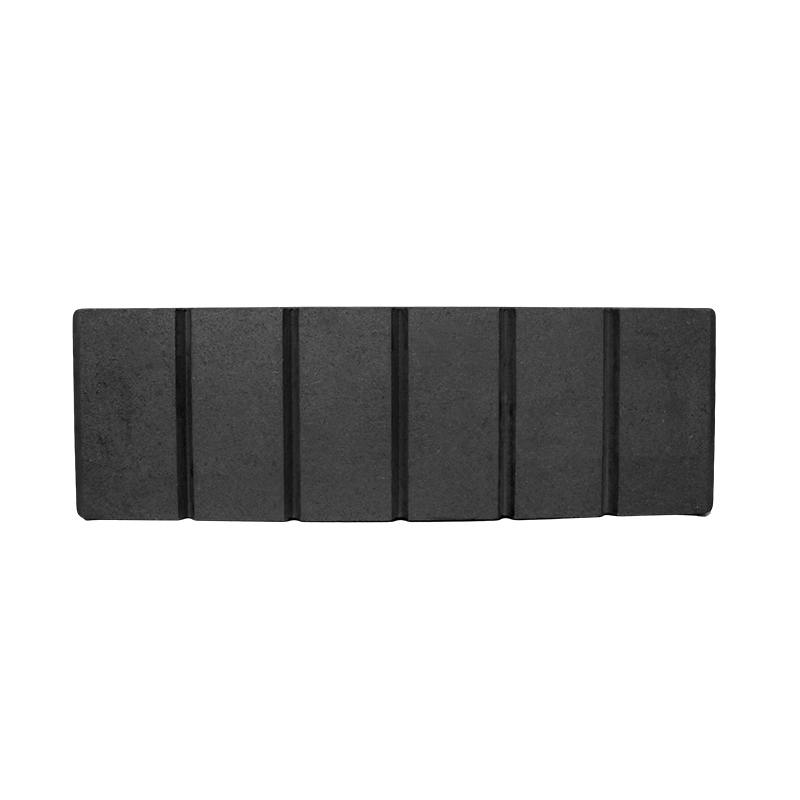
Remaining pad thickness: Measure the friction material thickness at multiple points across the pad face. Most wind turbine brake pads have a minimum thickness limit specified by the OEM — typically 3–5mm of remaining friction material above the backing plate. Replace the pad if any measurement is at or below the minimum limit.
Wear uniformity: Compare thickness measurements across the pad width and length. A difference of more than 1.5–2mm between the leading edge, trailing edge, or inner and outer measurements indicates tapered wear and requires investigation of caliper alignment and disc runout before fitting replacement pads.
Surface condition: Inspect the pad friction face for glazing (a smooth, shiny appearance), scoring (deep grooves parallel to the sliding direction), cracking, or edge chipping. Any of these conditions warrants immediate replacement regardless of remaining thickness.
Backing plate integrity: Check that the friction material is firmly bonded to its steel backing plate with no cracks, delamination, or corrosion at the bond interface. A pad with a compromised backing plate bond can fail catastrophically under emergency braking loads.
Disc surface condition: Always inspect the brake disc alongside the pads. Look for scoring, heat bluing, hard spots (localized glazed areas on the disc surface), or uneven wear. A damaged disc will quickly destroy new pads if not addressed at the same time as the pad replacement.
Selecting Replacement Wind Turbine Brake Pads: OEM vs. Aftermarket
When sourcing replacement wind turbine braking pads, operators face a choice between OEM-supplied parts and aftermarket alternatives. Both routes have legitimate applications, but the decision carries significant safety implications and should be made with clear information rather than purely on cost grounds.
OEM Brake Pads
Original equipment manufacturer brake pads are formulated and tested specifically for the braking system design of a particular turbine model. The friction coefficient, compressibility, and thermal behavior have been validated against the OEM's brake system design to ensure the correct braking torque is achieved within the specified hydraulic pressure range. Using OEM pads preserves the original brake system performance validation and is the safest choice where the brake system has not been independently re-engineered. The main disadvantage is cost — OEM wind turbine brake pads typically carry a significant price premium compared to aftermarket alternatives, and lead times can be long for older turbine models where the OEM has reduced parts stocking.
Aftermarket Brake Pads
High-quality aftermarket wind energy brake pads from reputable friction material specialists can offer comparable or even superior performance to OEM parts at lower cost. The key requirement is that the aftermarket pad must be validated to match the friction coefficient range and thermal performance of the original pad — not just the physical dimensions. A reputable aftermarket supplier will provide a technical data sheet showing friction coefficient data (preferably tested to ISO 6310 or equivalent), thermal stability results, compressive strength, and shear strength. They should also be able to confirm the formulation type (sintered, semi-metallic, organic) and its suitability for the specific braking application.
Be cautious of low-cost aftermarket pads that provide only dimensional specifications without friction and thermal performance data. Wind turbine brake pads are safety-critical components — an undersized friction coefficient means the brake cannot generate sufficient torque, and this failure mode may not be detectable until the pad is called upon to perform an emergency stop. Always require full technical data and, where possible, an independent friction test report before approving a new aftermarket pad supplier for production use.
Best Practices for Wind Turbine Brake Pad Replacement
Replacing wind turbine brake pads correctly is as important as selecting the right pad. Poor installation practice can cause premature failure of new pads and damage to expensive brake discs. The following practices apply across rotor brake, yaw brake, and pitch brake applications.
Replace pads in complete sets: Always replace all pads in a braking system simultaneously, not just the ones that have reached minimum thickness. Mixing worn and new pads creates uneven contact pressure across the disc and leads to uneven wear, reduced braking torque, and increased disc wear on the new-pad side.
Clean and inspect calipers before fitting: Flush caliper hydraulic circuits, inspect piston seals, and verify that guide pins or sliding mechanisms move freely. A stiff caliper will cause the pad to drag against the disc when disengaged, causing rapid overheating and premature wear of the new pads.
Check disc thickness and runout: Measure brake disc thickness at multiple points around the disc circumference and compare to the OEM minimum disc thickness specification. Measure lateral runout with a dial gauge — typically runout should not exceed 0.2–0.3mm for rotor brake discs. A disc that is below minimum thickness or has excessive runout must be replaced or machined before new pads are fitted.
Bed in new pads before full load: New brake pads should be bedded in with a series of light braking applications to transfer a thin, uniform layer of friction material to the disc surface. For rotor brakes, this typically involves a controlled series of partial stops from low rotor speed. Skipping the bedding-in process leads to uneven initial contact, reduced effective friction coefficient in early service, and uneven long-term wear.
Document pad installation and initial thickness: Record the date of installation, the pad part number, batch number, and initial thickness measurements for each pad position. This baseline data makes subsequent wear rate tracking far more accurate and allows early identification of abnormal wear trends before they become safety issues.