 English
 中文简体
中文简体Content
- 1 Why Standard Grease Fails in Hot Environments and What High Temperature Grease Does Differently
- 2 Understanding Thickener Types and Their Role in Heat Resistance
- 3 Key Performance Properties to Evaluate in a High Temp Grease
- 4 Comparing Common High Temperature Grease Types by Application
- 5 Industries That Depend on High Temperature Grease
- 6 Application and Maintenance Tips for Using High Temperature Grease Effectively
- 7 Final Thoughts on Choosing High Temperature Grease
Why Standard Grease Fails in Hot Environments and What High Temperature Grease Does Differently
High temperature grease is a specialized lubricant formulated to maintain its structure, adhesion, and lubricating properties even when exposed to sustained heat that would cause standard grease to break down, oxidize, or separate. Regular grease relies on a base oil and thickener system designed for moderate operating temperatures, and when exposed to excessive heat, that base oil can evaporate or oxidize faster than it can be replenished, leaving bearings and moving parts running dry. High temperature grease addresses this problem by using more thermally stable base oils, often synthetic, combined with thickener systems specifically chosen to resist softening or melting at elevated temperatures, allowing the grease to continue protecting equipment in conditions that would quickly degrade conventional lubricants.
This type of grease is essential in industries where equipment regularly operates near or above 150°C, including kilns, ovens, foundries, steel mills, and any machinery positioned close to heat-generating processes. Choosing the wrong grease in these environments doesn't just shorten lubrication intervals, it can lead to premature bearing failure and unplanned equipment downtime.
Understanding Thickener Types and Their Role in Heat Resistance
The thickener system used in a high temperature grease has a major impact on how well it holds up under sustained heat, and different thickener types offer distinctly different performance profiles.
Lithium Complex Thickeners
Lithium complex greases offer good all-around performance and can typically handle temperatures up to around 150°C to 170°C, making them a common choice for general industrial applications that experience moderately elevated heat alongside standard operating conditions.
Polyurea Thickeners
Polyurea-thickened greases are known for excellent oxidation stability and long service life at elevated temperatures, often used in electric motor bearings and other sealed-for-life applications where re-lubrication access is limited.
Bentonite Clay Thickeners
Unlike soap-based thickeners, bentonite clay does not have a melting point, which means grease using this thickener maintains its structure even at very high temperatures, though it can be more prone to hardening over time if not replenished regularly.
Calcium Sulfonate Complex Thickeners
Calcium sulfonate complex greases combine high temperature stability with strong water resistance and rust protection, making them popular in applications that face both heat and moisture exposure simultaneously.
Key Performance Properties to Evaluate in a High Temp Grease
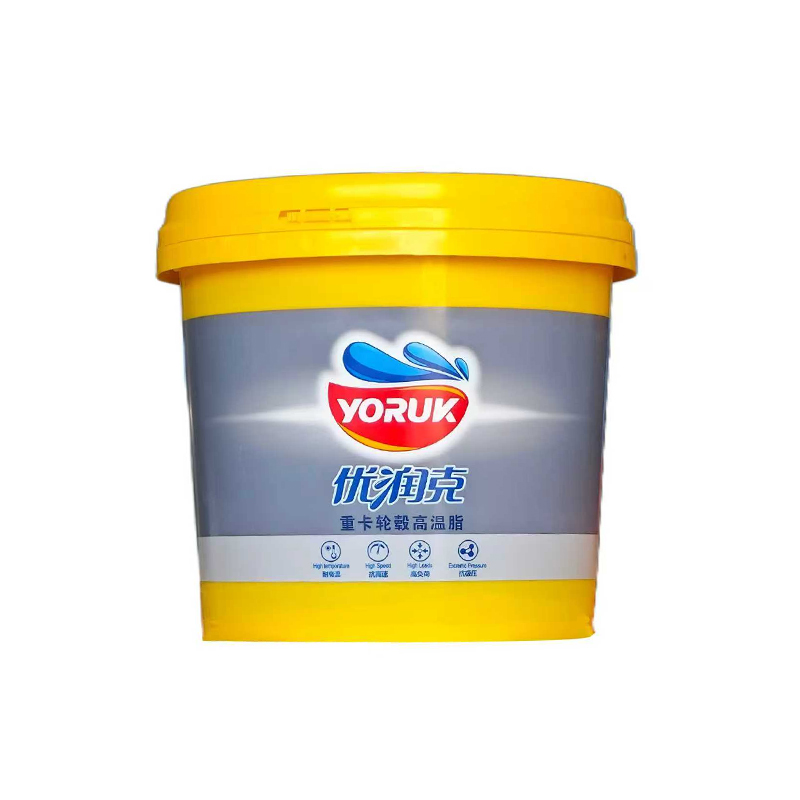
Beyond thickener type, several measurable properties determine how well a high temperature grease will perform in a specific application.
- Dropping point: The temperature at which the grease transitions from a semi-solid to a liquid state, which should be significantly higher than the equipment's actual operating temperature.
- Oxidation stability: Determines how well the grease resists chemical breakdown when exposed to heat and oxygen over extended periods.
- Base oil viscosity: Affects how well the grease maintains an adequate lubricating film at high temperatures without becoming too thin.
- Evaporation rate: Lower evaporation rates mean the grease retains its lubricating oil longer, reducing the frequency of required re-lubrication.
- Mechanical stability: Measures how well the grease maintains its consistency under continuous mechanical working in bearings and other moving components.
Comparing Common High Temperature Grease Types by Application
The table below offers a practical reference for matching high temperature grease types to typical industrial applications based on their heat tolerance and other performance characteristics.
| Grease Type | Max Continuous Temperature | Best Suited For |
| Lithium Complex | 150°C to 170°C | General industrial bearings, conveyor systems |
| Polyurea | 160°C to 180°C | Electric motor bearings, sealed-for-life applications |
| Bentonite Clay | 180°C to 200°C+ | Kilns, ovens, high-heat furnace equipment |
| Calcium Sulfonate Complex | 150°C to 180°C | Steel mills, marine and heavy equipment |
Industries That Depend on High Temperature Grease
While high temperature grease is used across many sectors, certain industries rely on it as a core part of routine equipment maintenance due to the extreme thermal conditions their machinery regularly faces.
- Steel and metal processing, where furnace-adjacent bearings and rollers face constant radiant heat exposure.
- Cement and kiln operations, where conveyor bearings and kiln support rollers operate near extremely high temperatures continuously.
- Food processing equipment, particularly ovens, dryers, and baking lines that require food-grade high temperature lubricants.
- Automotive and industrial electric motors, where sealed bearings need long-lasting lubrication under sustained thermal load.
- Paper and pulp mills, where dryer section bearings are continuously exposed to high heat and steam.
Application and Maintenance Tips for Using High Temperature Grease Effectively
Even the best high temperature grease will underperform if it isn't applied and maintained correctly. Over-greasing bearings can trap excess heat and actually accelerate breakdown, so following manufacturer-recommended fill quantities is important rather than assuming more grease always provides better protection. Re-lubrication intervals should be shortened compared to standard equipment, since heat naturally accelerates the oxidation and evaporation process even in grease specifically designed for high temperature use. Monitoring bearing temperatures with infrared thermometers or built-in sensors can help identify when lubrication intervals need adjustment before a failure occurs. It's also important to avoid mixing different thickener types when relubricating equipment, since incompatible thickeners can cause the grease to soften, separate, or lose its structural integrity entirely.
Final Thoughts on Choosing High Temperature Grease
Selecting the right high temperature grease comes down to understanding the specific heat range your equipment operates in, matching that need to the appropriate thickener type, and paying close attention to key performance properties like dropping point and oxidation stability. From lithium complex greases suited to moderately hot industrial settings to bentonite clay formulations built for extreme kiln and furnace environments, choosing correctly can mean the difference between reliable, long-term equipment performance and frequent, costly bearing failures. Combined with proper application practices and consistent re-lubrication schedules, the right high temperature grease keeps critical machinery running smoothly even under the most demanding thermal conditions.