 English
 中文简体
中文简体WVA 19094 is not a part number you guess. It is a defined friction lining specification used on BPW trailer axles and a range of heavy commercial vehicles. If your fleet runs BPW axles, this is the lining that matches the drum geometry, the load rating, and the heat pattern those axles generate. The question is not whether 19094 works for your trucks; it is which supplier can deliver it consistently and document the performance you are paying for.
Content
What the WVA 19094 Number Actually Means
The WVA numbering system is a European reference for brake linings. It identifies the exact footprint of the lining, the number and position of rivet holes, the thickness, and the friction classification. WVA 19094 belongs to a family of linings engineered for drum brakes on trailer axles and truck rear axles. On the physical part, you will typically see the WVA number stamped along with the manufacturer code and a friction grade like FF or FG.
The practical consequence is this: when you order 19094, you are not buying a generic rectangular block of friction material. You are buying a part with precise dimensional tolerances. If the lining is too thick or the holes are drilled in the wrong pattern, the brake will not seat correctly on the shoe. That leads to uneven contact, hot spots on the drum, and a much shorter service life. The WVA code exists to prevent those problems.
Where the 19094 Lining Is Used
BPW trailer axles
The most common application for WVA 19094 is the BPW axle platform. BPW axles are used extensively on trailers in Europe and beyond. The brake drum dimensions and shoe curvature on these axles are designed around a specific lining profile, and 19094 is one of the direct replacements that matches that profile. Fleet operators in the logistics and construction haulage sectors rely on it for exactly this reason.
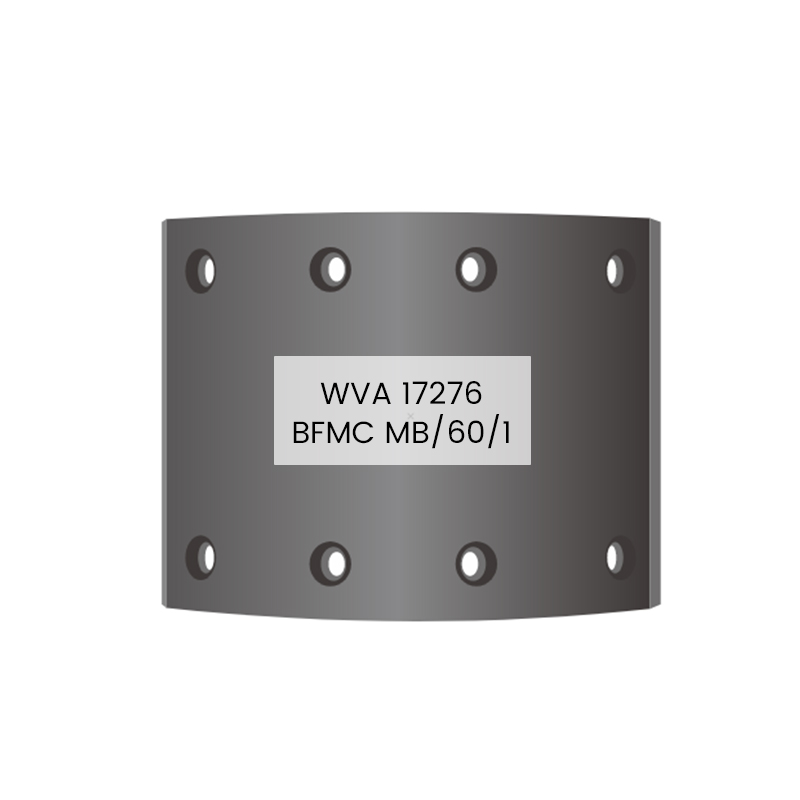
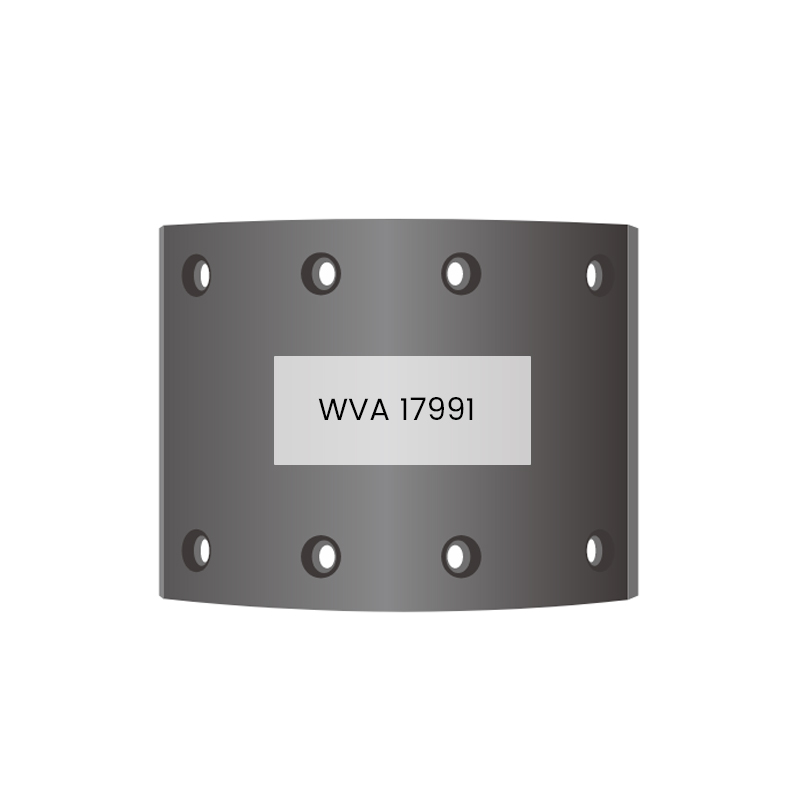
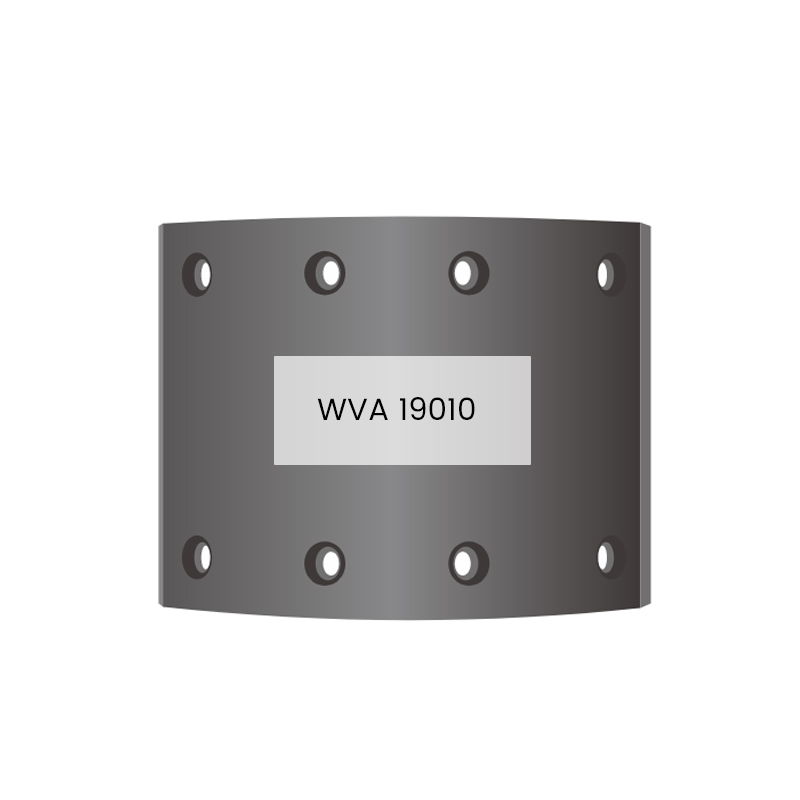
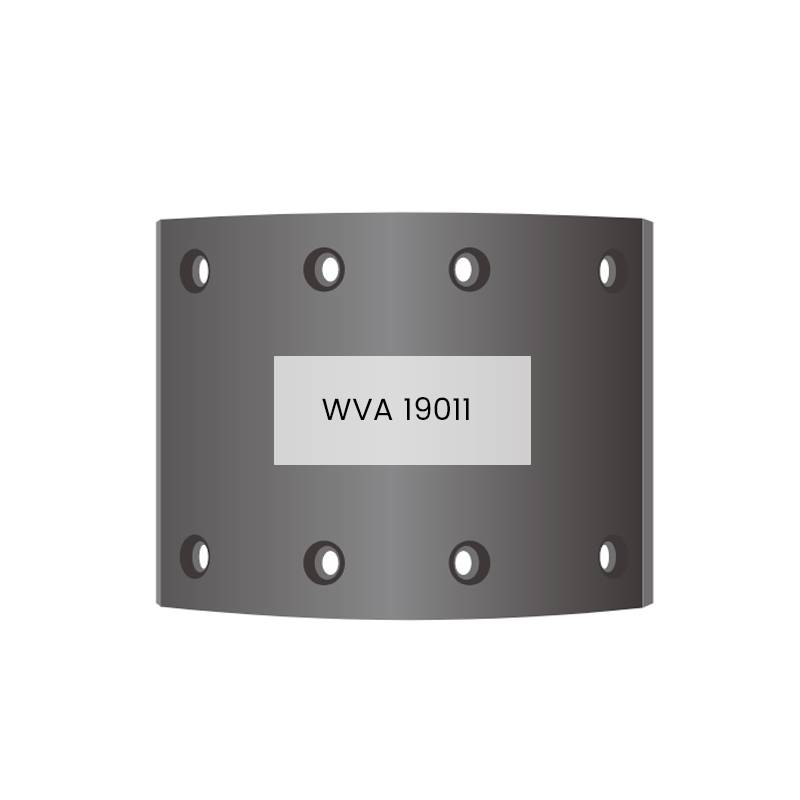
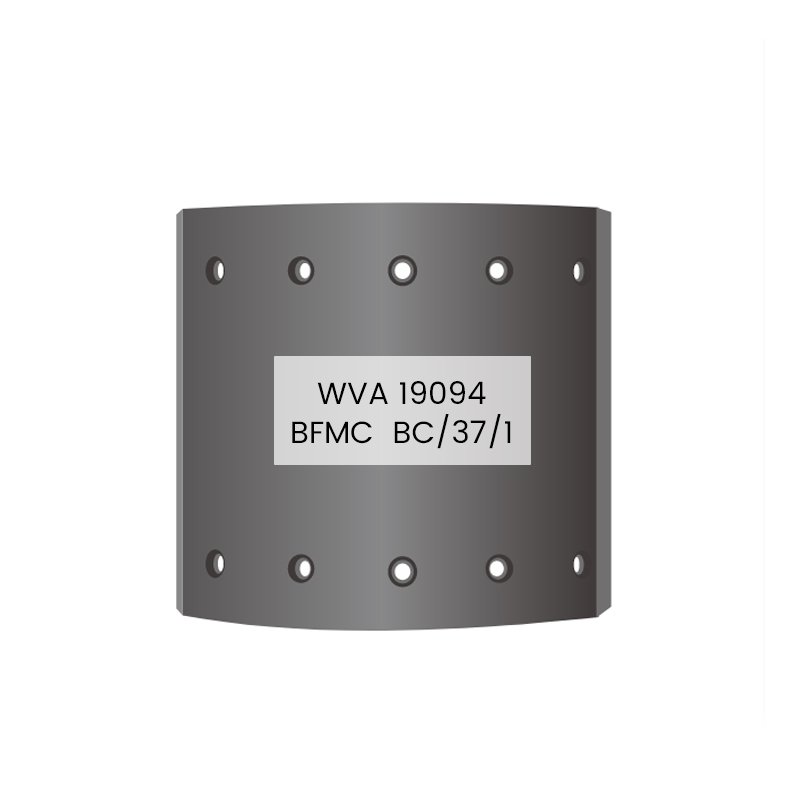 WVA 19094 BC/37/1 Brake Lining for BPW AxlesA direct replacement for BPW axle systems, this WVA 19094 BC/37/1 lining delivers stable friction performance under sustained braking. It handles frequent stop-and-go and heavy hauls, offering durable stopping power and long service life at an economical cost.View Product →
When you see a lining labelled 19094 BC 37 1, the suffix is a manufacturer-specific reference used by the supplier to identify the friction mix and the moulding batch. It does not change the fitment, but it may affect the friction coefficient you can expect. For BPW axle service, you want a lining that holds a stable friction coefficient under sustained braking at highway speeds and on long descents.
Heavy-duty trucks and commercial buses
Beyond BPW, the 19094 profile also appears on certain European truck rear axles and on commercial buses that use drum brakes. This is not a universal application, but it does cover a meaningful portion of the existing fleet in the European and Middle Eastern markets. If you are managing a mixed fleet, the 19094 can reduce inventory complexity by covering both trailer and truck applications where the drum geometry matches.
Performance Specifications That Matter
Fleet managers often ask whether a 19094 lining will perform in demanding conditions. The answer depends on three specific properties.
Friction stability
The friction coefficient of a good 19094 lining should stay within a narrow band across the intended operating temperature range. A common target is a coefficient between 0.38 and 0.45 for heavy-duty drum brake operation. If the coefficient rises or falls too sharply as the brake heats up, you will feel inconsistent pedal response. That inconsistency is a direct risk for loaded trailers, because the driver cannot modulate the brake as precisely in an emergency stop.
Heat fade resistance
Drum brakes are enclosed, which means heat is trapped. A lining that softens or gases off under prolonged braking will cause fade. The 19094 specification is typically bonded and moulded to resist fade within the temperature range generated by a fully loaded BPW axle. Good linings use mineral or semi-metallic formulations with stable wear properties. The practical benefit is a predictable stopping distance even after several consecutive downhill braking events.
Wear rate
Wear rate is a direct cost factor. If a lining wears out at 40,000 km instead of 80,000 km, your cost per kilometre doubles. The 19094 lining is a medium-to-long-life product when matched with the correct drum. The condition of the drum is always part of the calculation. A glazed or out-of-round drum will accelerate lining wear no matter the specification. Replacing the lining without checking the drum is a common mistake in fleet maintenance.
Installation and Maintenance Considerations
Check the drum before you fit the lining
Before fitting 19094, measure the drum internal diameter and check the surface finish. The recommended service limit for a BPW drum is usually printed on the drum or available from the axle manufacturer. If the drum is beyond the limit or shows heat checking, replace or machine it. Fitting new lining to a worn drum is a false economy. The new lining will bed in unevenly, creating noise and reducing braking efficiency from the first load.
Rivet and torque requirements
The 19094 lining is typically riveted or bonded to the shoe. Always replace the rivets, do not re-use old ones. Tighten to the specified torque. Under-tightened rivets can loosen and cause the lining to move within the shoe, leading to accelerated wear and potential braking failure. Over-tightening can crack the lining. If you are looking at a bonded design, the bonding surface must be clean and free of old adhesive residue.
Bedding-in procedure
A new 19094 lining needs a bedding-in period. This process transfers a layer of friction material onto the drum surface. Do not expect full braking performance from the first application. A controlled series of moderate stops, with cooling intervals between them, will create the ideal transfer layer. Fleet drivers should be instructed to avoid hard stops for the first 500 km after a reline.
How to Choose a Supplier for 19094 Truck Brake Lining
When you source 19094, the priority is supplier consistency. A relining workshop has no value in a product that fits perfectly on the first batch but shows friction scatter on the second. Look for a manufacturer who operates a quality management system certified to IATF 16949. That standard is specifically designed for automotive supply chains and ensures that the production process is audited for repeatability and traceability.
Another practical criterion is non-asbestos content. This is a legal requirement in most markets, but it also tells you something about the formulation. Modern 19094 linings use combinations of mineral fibres, steel wool, and organic binders. You should request the technical data sheet and verify the friction coefficient, density, and hardness values. Also ask about the packaging and the batch numbering. A good supplier can trace the raw material batch to the final product.
If you are evaluating a manufacturer, review their factory setup. Companies with dedicated mixing, pressing, and curing lines are generally better able to control product variation than a simple assembly shop. You can see this level of detail in our factory facility overview, which shows the scale of production behind our brake lining range.
For any fleet that runs BPW axles, the 19094 truck brake lining is a proven specification. The part number is not a mystery. It is a clear contract between the lining and the drum: exact fitment, certified friction performance, and predictable wear. Choosing a manufacturer with a documented quality system and a stable production process is what makes that contract real. The money saved on premature lining changes and damaged drums will show up in the operating budget every quarter.